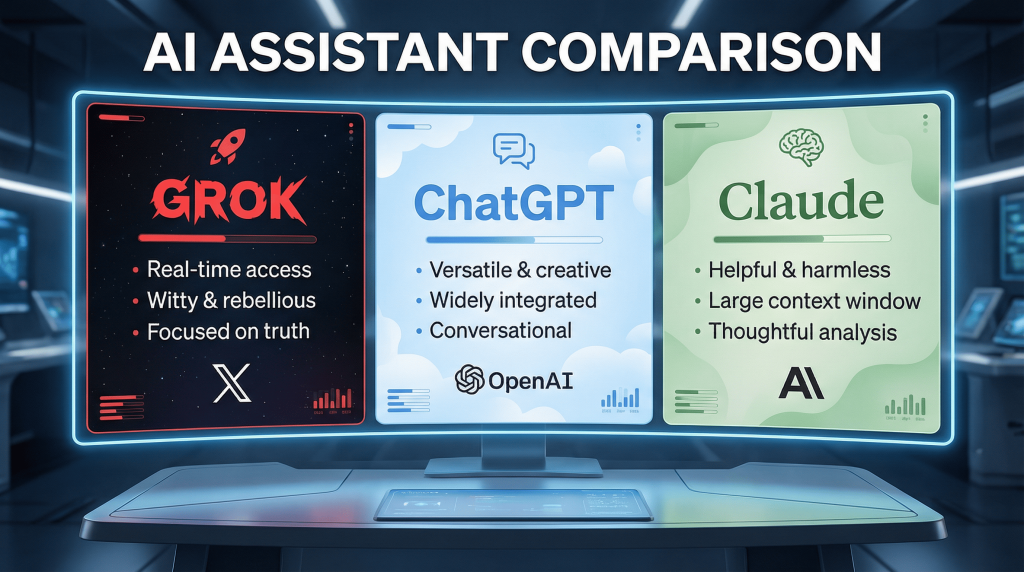

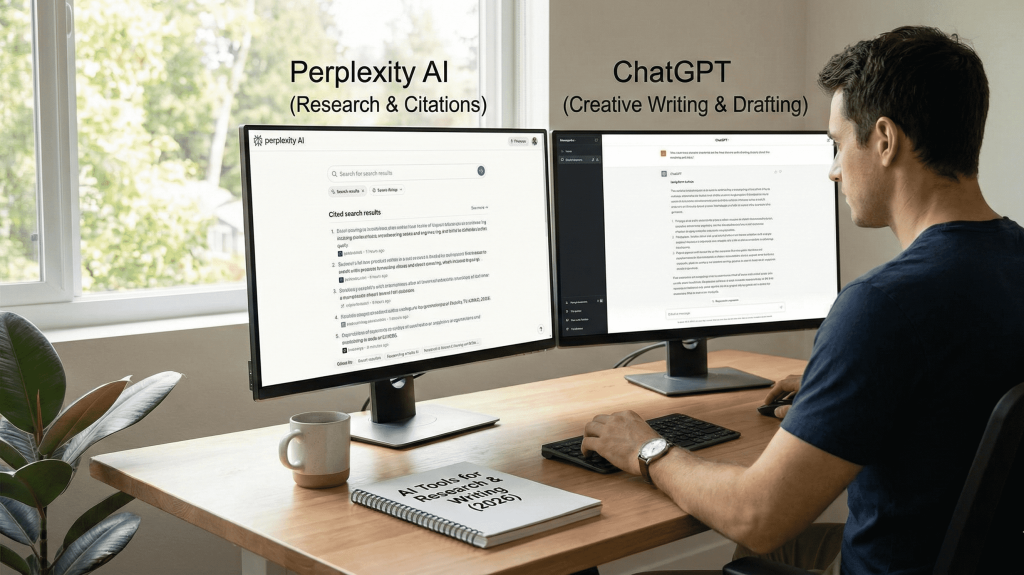
Perplexity and ChatGPT may look similar from a distance, but they actually serve different purposes. Perplexity is more like a smart search engine built on top of strong models tightly integrated with live web search, while ChatGPT is a general AI assistant that excels at writing, coding and creative work, with good search abilities but not always the same focus on direct sourcing as Perplexity. The aim of this pillar is to show when Perplexity is the best choice for fast, source‑backed research and when ChatGPT is better for deep thinking and creative production.
1. What Makes Perplexity Different from ChatGPT in Search?
Perplexity is designed from the ground up for source‑based search; almost every answer comes with a set of clearly visible links, often opened in side panels. In many tests, Perplexity has been faster at pulling up‑to‑date facts, summarizing multiple sources at once and giving concise, evidence‑backed answers, which makes it very attractive for academic research, news tracking and market analysis. ChatGPT also has a search feature now, but its focus is more on blending results with deeper reasoning and generating long, well‑structured reports.
2. ChatGPT’s Strengths in Writing, Coding and Versatility
Most comparisons agree that ChatGPT clearly leads in creative writing, long‑form structuring, step‑by‑step explanations and complex coding or problem solving. ChatGPT also offers rich multimodal support (text, images, audio), custom GPT creation and a large ecosystem of integrations, making it ideal as a “general intelligence layer” for your daily work. In simple terms, Perplexity is best when factual accuracy and sources are your main concern, while ChatGPT is best when you want organized content, code or deep reasoning built on top of those facts.
3. Information Accuracy and Reliability
Recent accuracy tests show that Perplexity often wins on up‑to‑date factual questions, because it builds answers directly from post‑2022 sources and exposes those sources clearly, with strong performance on breaking news and fresh content. ChatGPT can still hallucinate if used without search, though newer versions are better, and it is excellent at organizing and explaining whatever data it receives. A powerful workflow is to let Perplexity search and collect sources, then ask ChatGPT to review, explain and turn them into a coherent report tailored to your context.
4. Pricing and Perplexity Pro / Max Plans
Both Perplexity and ChatGPT offer paid plans starting around 20 USD per month for individual users, but they deliver value differently. Perplexity Pro gives you a very high allowance of Pro Searches, access to advanced models like GPT‑4o and Claude 3 Sonnet inside the same interface, generous file uploads, faster performance and an ad‑free experience. The higher‑tier Max plan unlocks near‑unlimited access to the latest models, Labs for building boards and projects, and top‑priority performance, aimed at professionals and researchers who use Perplexity heavily every day.
5. Practical Strategy: Perplexity for Research, ChatGPT for Production
Many recent guides recommend using both tools rather than trying to crown a single winner. Use Perplexity when you need a fast, source‑backed answer on a new topic, then copy its summaries and links into ChatGPT to generate articles, slide decks, video scripts or even code that leverages those findings. This combo lets you pair Perplexity’s strength in factual retrieval with ChatGPT’s power in organization, explanation and creativity.