

In modern SEO, images directly impact:
- user engagement,
- time on page,
- accessibility,
- image search visibility,
- and overall topical authority.
Yet, most blogs still rely on generic stock images—the same visuals used by thousands of other websites. This weakens originality and limits SEO potential.
With Photoshop integrated inside ChatGPT, creators can now generate and optimize custom, SEO-friendly images faster than ever, using simple natural-language instructions.
Understanding how to do this correctly is a major competitive advantage.
This article explains:
- why images matter for SEO,
- how Photoshop inside ChatGPT fits into an SEO workflow,
- how to create images that actually rank,
- and how to align visuals with content clusters and E-E-A-T.
Why Images Matter More Than Ever for SEO
Google no longer evaluates pages based on text alone.
Images influence SEO in multiple ways:
1. User Experience Signals
High-quality visuals:
- keep users engaged longer,
- reduce bounce rate,
- improve content readability.
Better engagement sends positive behavioral signals to Google.
2. Image Search Traffic
Google Images is a major traffic source.
Optimized images can:
- rank independently,
- bring highly relevant visitors,
- support the main article’s visibility.
3. Topical Relevance
Images that visually reinforce the article topic help Google better understand:
- what the page is about,
- how focused and authoritative the content is.
Generic images weaken topical clarity.
The SEO Problem with Stock Images
Stock images are convenient—but harmful at scale.
Common issues:
- overused visuals,
- low relevance to specific topics,
- weak differentiation from competitors,
- reduced trust and originality.
When dozens of articles use the same “AI illustration” or “business meeting photo,” Google sees no unique value.
This is where Photoshop inside ChatGPT becomes a game-changer.
How Photoshop Inside ChatGPT Solves SEO Image Issues
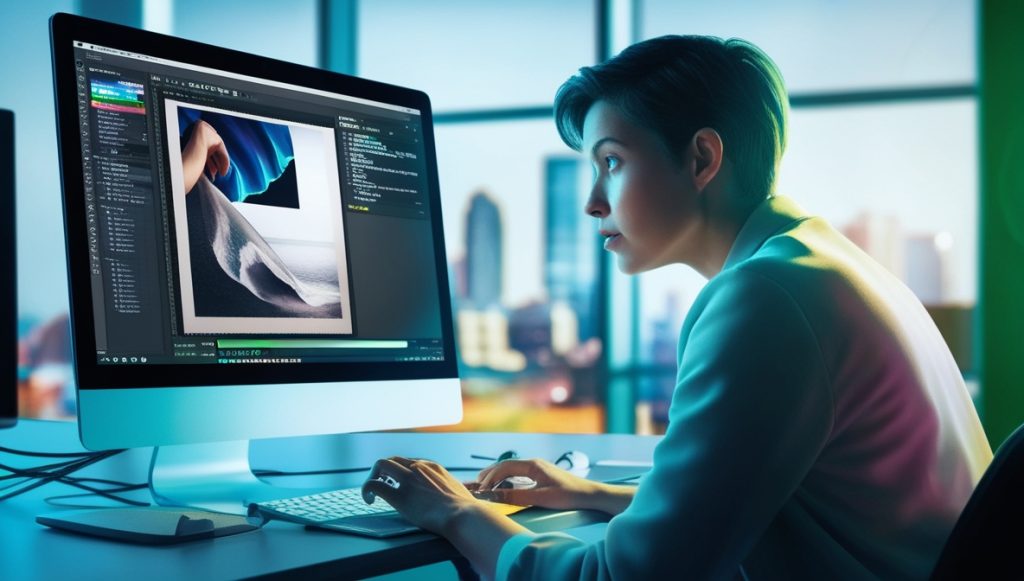
Photoshop inside ChatGPT allows creators to:
- generate custom visuals per article,
- adapt images precisely to the topic,
- maintain visual consistency across a content cluster,
- do it all without complex design skills.
Instead of searching stock libraries, you:
- upload or generate an image,
- describe the SEO intent,
- let AI handle the optimization.
👉 Visuals become strategic SEO assets, not afterthoughts.
Step-by-Step: Creating SEO-Friendly Images with ChatGPT + Photoshop
Step 1: Align the Image with Search Intent
Before editing, ask:
- Is the article informational, commercial, or transactional?
- What does the user expect to see visually?
Examples:
- Guides → explanatory visuals
- Comparisons → clear, structured images
- Tutorials → clean, focused visuals
Prompt example:
“Create an image that visually supports an educational article about AI-powered image editing.”
Step 2: Create a Unique, Topic-Specific Visual
Avoid vague requests like “make it look nice.”
Better prompts:
- “Create a clean, professional image illustrating AI-assisted photo editing for SEO content.”
- “Design a visual concept aligned with AI, automation, and digital creativity.”
This ensures:
- originality,
- topical alignment,
- stronger SEO signals.
Step 3: Optimize for Web Performance
Page speed is a ranking factor.
Use prompts such as:
- “Optimize this image for fast web loading while maintaining quality.”
- “Resize and compress this image for blog use.”
Photoshop handles technical optimization in the background.
Step 4: Maintain Visual Consistency Across Your Content Cluster
Consistency strengthens authority.
Within a pillar + satellites structure:
- similar color tones,
- similar styles,
- similar visual language.
Prompt example:
“Apply a consistent visual style aligned with a modern AI and automation blog.”
This reinforces brand identity and E-E-A-T.
Image SEO Best Practices (That Most Bloggers Miss)
1. One Strong Visual per Section
Avoid clutter.
Each image should support a specific idea.
2. Descriptive File Names
After export:
- ❌ image123.jpg
- ✅ photoshop-chatgpt-seo-image.jpg
3. Meaningful ALT Text
ALT text helps:
- accessibility,
- image search,
- semantic understanding.
Example:
“AI-generated image illustrating Photoshop integration inside ChatGPT for SEO content.”
4. Contextual Placement
Images should appear:
- after relevant headings,
- near explanatory text,
- never randomly.
Context matters more than quantity.
How SEO Images Strengthen E-E-A-T
Google’s E-E-A-T framework values:
- expertise,
- experience,
- authority,
- trust.
Custom visuals signal:
- effort,
- originality,
- subject mastery.
Creators who combine:
- deep content,
- custom visuals,
- consistent style,
appear far more authoritative than those relying on stock assets.
Photoshop Inside ChatGPT vs Traditional Image SEO Workflows
Traditional Workflow
- search stock sites,
- download images,
- manually edit,
- repeat for each article.
Time-consuming and repetitive.
ChatGPT + Photoshop Workflow
- describe intent,
- generate/edit image,
- optimize instantly,
- reuse style across articles.
Faster, scalable, and SEO-focused.
Common SEO Image Mistakes to Avoid
❌ Using the same image across multiple articles
❌ Ignoring image size and performance
❌ Generic visuals unrelated to the topic
❌ Missing ALT text
❌ No visual consistency across content clusters
Each of these weakens SEO potential.
How This Fits into a Pillar + Satellites Strategy
In a topic cluster:
- the pillar defines the main concept,
- satellites go deeper into subtopics.
Images should follow the same logic:
- broad visuals in the pillar,
- specific visuals in satellites,
- consistent style across all pages.
This visual coherence helps Google understand topical depth.
The Long-Term SEO Advantage
Most websites still treat images as decoration.
By using Photoshop inside ChatGPT strategically, you:
- differentiate your content,
- improve engagement metrics,
- strengthen topical authority,
- future-proof your SEO strategy.
This approach scales beautifully for:
- blogs,
- niche authority sites,
- AI-focused publications like AIwiner.
Conclusion
SEO is no longer just about words.
Images play a critical role in how Google evaluates quality, relevance, and authority.
With Photoshop integrated inside ChatGPT, creators finally have a scalable way to produce:
and SEO-friendly assets.
unique visuals,
optimized images,
consistent branding,