

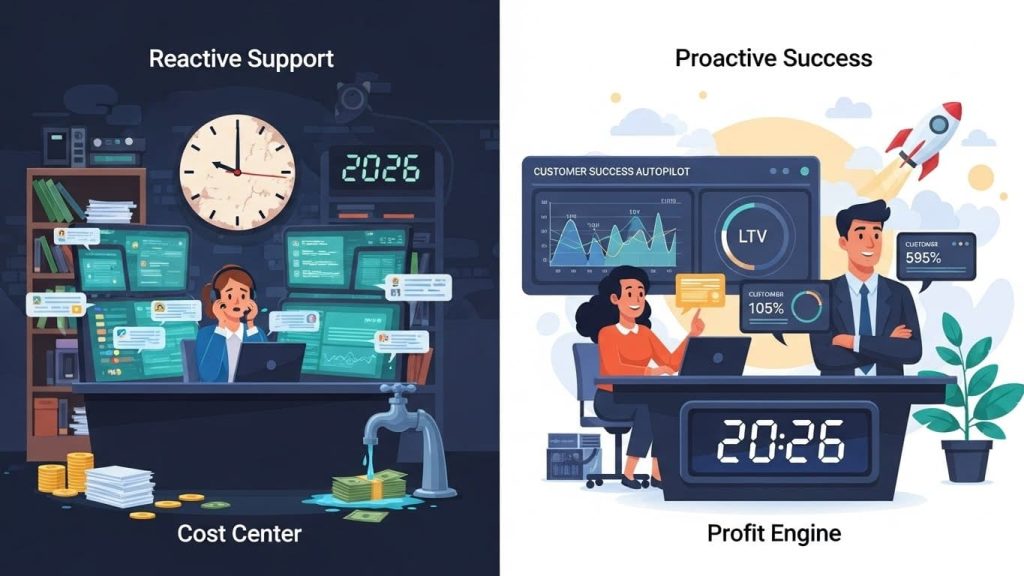
Reactive support is a cost center; proactive success is a profit engine. If you wait for a ticket to arrive, you have already failed the retention test. Integrating your support stack into broader autonomous business systems allows you to detect churn signals before they manifest. By automating the onboarding and check-in process, your system acts as a persistent concierge that nurtures the user relationship, allowing your human success managers to handle only the most complex accounts.
Detecting churn before the cancellation The moment a user stops engaging with core features, the clock starts ticking. Traditional success teams only notice this when it is too late—during the renewal conversation. An autonomous success engine monitors health scores in real-time. If a key account’s activity drops below a specific threshold, the system triggers a personalized outreach or a technical “nudge” to get them back on track. You are not just solving problems; you are preventing them from existing in the first place.
The automated onboarding experience
First impressions are the only impressions that count in a digital product. If your onboarding requires a human to schedule a call, you are creating friction. By piping user data into an automated onboarding flow, the system delivers the right training at the exact moment the user needs it. This ensures that every customer reaches their “Aha!” moment faster. By integrating this with your lead routing logic, you can identify which users need a personal touch and which can be successfully offboarded through automated logic alone.
Scaling personalized communication
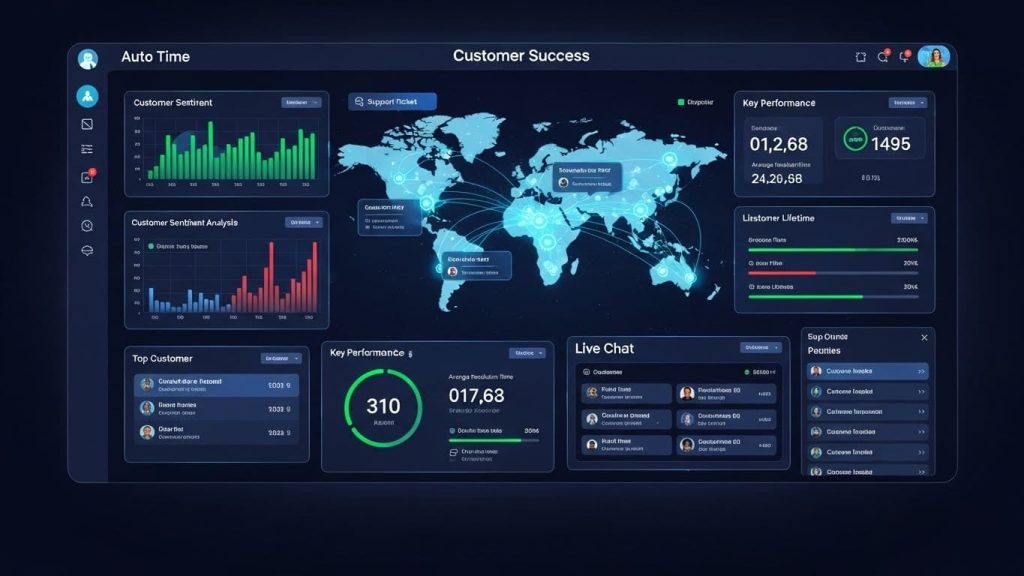
Personalization is usually the first casualty of scale. However, when your customer data is piped into your communication tools, you can maintain a high level of relevance for thousands of users simultaneously. The system can reference specific usage patterns, account milestones, and even industry benchmarks in its automated check-ins. This creates a high-touch feel without the high-touch cost. Your customers feel seen and supported, while your team spends their time on strategic expansion rather than basic troubleshooting.
Building a feedback loop into product development
An integrated success system does more than just keep customers; it informs the future of your company. By automatically tagging and categorizing common friction points, the system provides your product team with a roadmap of what needs to be fixed. This turns every support interaction into a data point for growth. You stop guessing what your users want and start building exactly what they need based on the clear signals your autonomous infrastructure is collecting 24/7.
Conclusion Transitioning to an autopilot success model allows your business to scale its impact without sacrificing the user experience. Retention becomes a byproduct of your system’s design rather than a result of manual effort. Once your customer relationships are secured, you can focus on the technical side of your growth, specifically building real-time capital tracking through automated financial loops.


