
Building self healing sales funnels for 24/7 revenue capture
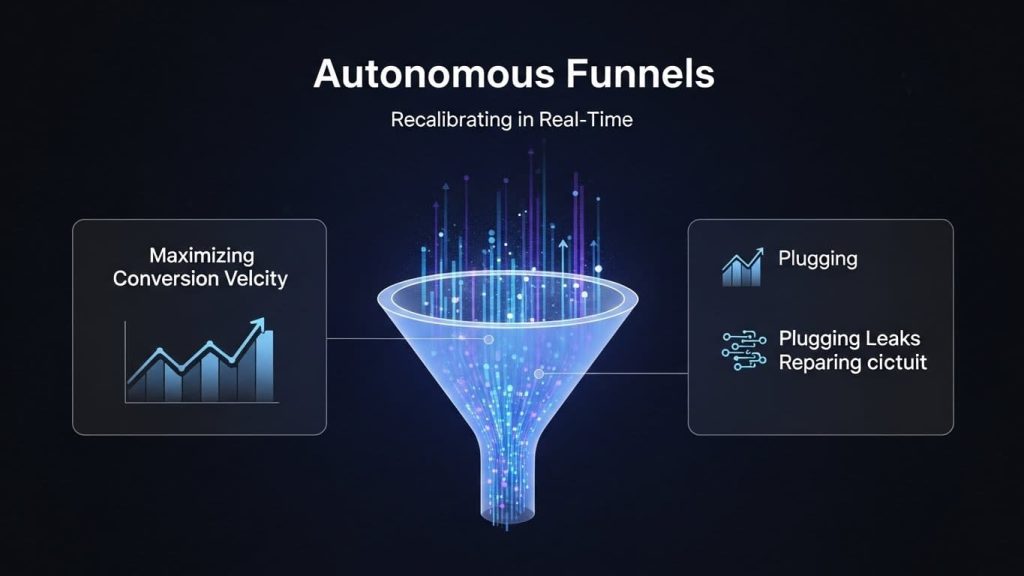
A broken link or a slow response time is a silent killer for your bottom line. Traditional funnels require constant monitoring, but the shift toward autonomous business systems allows for a more resilient architecture. These self-healing setups identify friction points and trigger corrective actions in real-time. When your sales process can recalibrate itself based on incoming lead behavior, you move from chasing revenue to managing an inevitable flow of conversions that never sleeps.
Eliminating the bottleneck of manual follow-up
Most sales funnels die because humans are slow. A lead comes in at 2:00 AM and sits in an inbox until a rep logs in at 9:00 AM. By then, the intent has cooled. A self-healing funnel removes this latency by piping lead data directly into automated response sequences that adapt based on the prospect’s profile. If a high-value lead doesn’t engage with the first touchpoint, the system detects the silence and shifts the strategy automatically. You are no longer relying on a salesperson’s memory to keep the deal alive.
Architecture for autonomous revenue capture
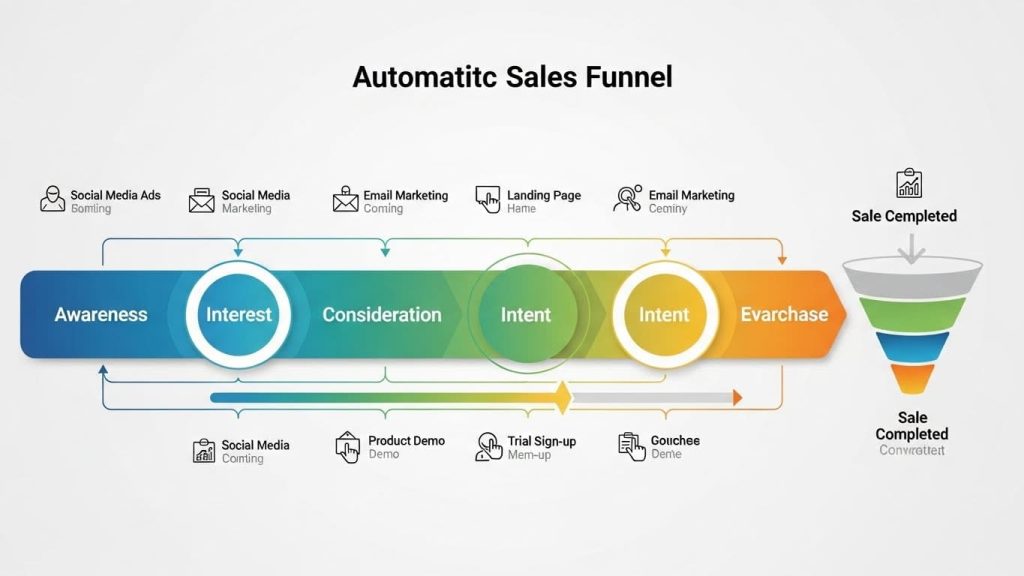
Building a funnel that fixes itself requires a deep integration between your front-end capture and your back-end logic. You need to map out every possible exit point a customer might take. When the system sees a drop-off at the pricing page, it can trigger a specific case study or a targeted FAQ to address the friction. This level of conversion optimization ensures that the funnel is constantly plugging its own leaks. You aren’t just running traffic; you are engineering a machine that optimizes its own performance.
Dynamic lead scoring and routing
Not all leads are created equal, and your funnel should know that. By integrating sophisticated lead scoring into the flow, the system can prioritize prospects based on their behavior and firmographics. If a CEO from a Fortune 500 company enters the funnel, the system bypasses standard nurtures and triggers an immediate high-priority alert. This ensures your resources are always focused on the highest ROI opportunities. The system manages the volume so your team can focus on the value.
Scaling velocity through system resilience
The beauty of an autonomous funnel is its ability to handle sudden spikes in traffic without breaking. Because the logic is handled by infrastructure rather than individuals, doubling your lead flow doesn’t double your workload. The system remains stable, processing data and moving prospects toward a close with surgical precision. This resilience allows you to spend more on customer acquisition with the confidence that your back-end can actually convert the interest into revenue.
Conclusion Stop building static pages and start engineering dynamic systems. A funnel that requires a human to move a lead from stage A to stage B is a liability in 2026. Once your revenue capture is on autopilot, you can focus on the operational backbone of your company, such as implementing real-time reporting to track your growing margins with total clarity.