
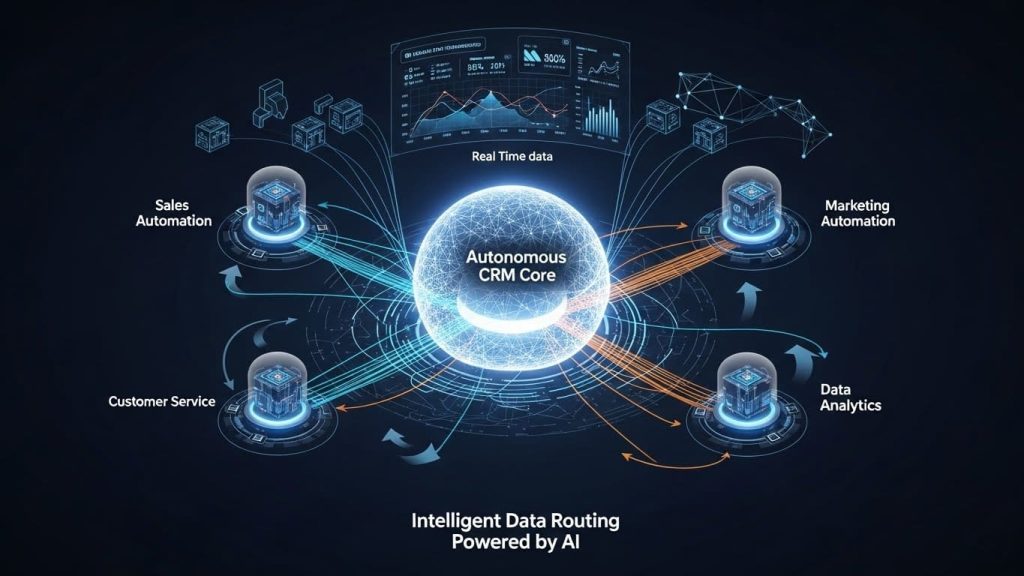
Autonomous business operations 2026 is one of the most important topics in AI and automation in 2026. Most business owners treat their database like a dusty ledger rather than a living employee. You are sitting on a goldmine of data that remains stagnant because you lack the pipes to move it. To win in this landscape, you must transition toward autonomous business systems that handle the heavy lifting of lead categorization and routing. By embedding logic directly into your infrastructure, you ensure that no prospect falls through the cracks while your team focuses on high-level strategy.
Stop treating data like a static library
If your CRM requires a human to “remember” to follow up, your system is broken. A modern business requires a logic engine that triggers actions based on behavior, not calendar reminders. When a lead interacts with your stack, the data should flow through predefined pipes that score the intent and update the record instantly. This is not about simple organization. This is about building a nervous system for your company that reacts to external stimuli without waiting for a manager to approve the next step.
Engineering the automated routing layer
Piping your models into your CRM allows for sophisticated lead routing that human teams cannot match for speed. You can build logic that analyzes the complexity of an inquiry and assigns it to the specific rep best suited for the job. This removes the “random distribution” flaw that plagues most sales floors. By automating the hygiene of your data, you ensure your sales team spends their time talking to qualified buyers instead of cleaning up messy contact fields.
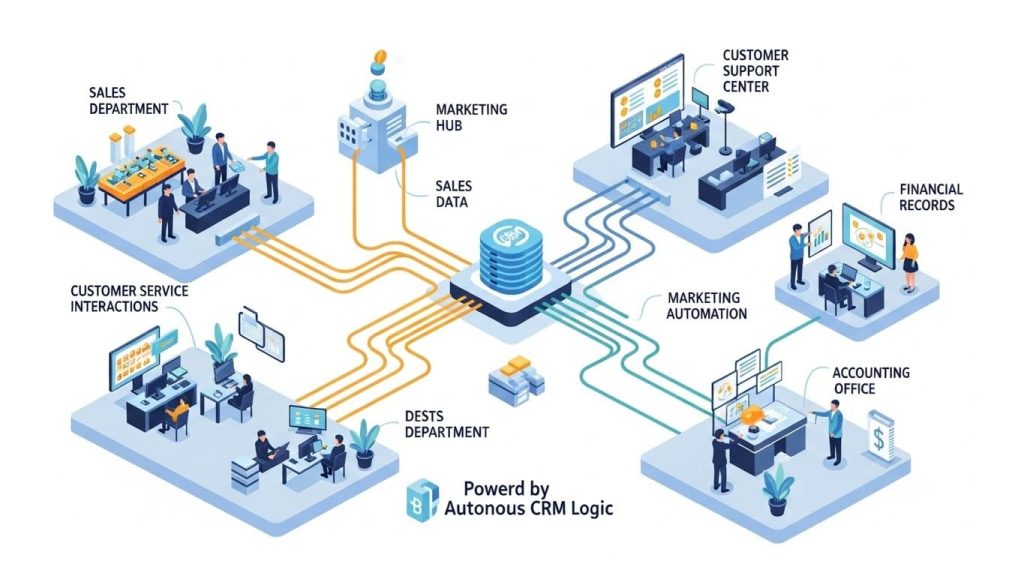
Data hygiene as a competitive advantage
Clean data is the fuel for every other system in your organization. If your CRM is filled with duplicates or outdated information, your automation will fail. By integrating automated verification loops, the system checks for errors and corrects them in real-time. This level of maintenance ensures that your marketing spend is never wasted on dead leads. You stop playing defense with your data and start using it as an offensive weapon to outpace competitors who are still manually typing notes.
The shift to autonomous decision making
The final stage of integration is allowing the system to make low-stakes decisions. This includes shifting a lead’s status, triggering a specific email sequence, or alerting a director to a high-value opportunity. These small actions happen in milliseconds. When you remove the human bottleneck from these repetitive tasks, the velocity of your business increases exponentially. You are no longer limited by the number of hours your staff works, but by the efficiency of the logic you have engineered.
Conclusion Building a robust logic engine is the prerequisite for scaling in a hyper-competitive market. Without this foundation, your growth will always be capped by manual labor. Once your data flows freely through these pipes, you can begin optimizing your revenue capture through self healing sales funnels to ensure no lead is ever left behind.
The Great CRM Face-Off: Claude 3.5 vs. GPT-4o for CRM Automation
In our latest Case Study, we showed how automation saves time. But automation is only as good as the data it processes. If the AI hallucinates a lead’s phone number or budget, the whole system collapses.
We ran a stress test with 1,000 unformatted raw leads to see which model integrates better with our Business Operations.
The Test: Raw Data Extraction & Formatting
The Task: We fed both models 500 messy emails, Zoom transcripts, and LinkedIn messages. The goal was to extract Name, Budget, Intent Score (1-10), and Next Step, then format them into a JSON string for Make.com.
The Results:
- Claude 3.5 Sonnet: 98.4% Accuracy. It correctly identified intent even when the lead was sarcastic. Zero formatting errors.
- GPT-4o: 91.2% Accuracy. It struggled with sarcasm and had 4 “hallucinations” where it invented phone numbers that weren’t in the text.
Instruction Following (The “Negative Constraint” Test)
We told both models: “Extract the data BUT if the budget is under $1000, mark them as ‘Low Intent’ and do NOT create a follow-up task.”
- Claude’s Performance: Flawless. It followed the negative constraint every single time.
- GPT’s Performance: It occasionally created tasks for low-budget leads, failing to follow the “Do NOT” instruction.
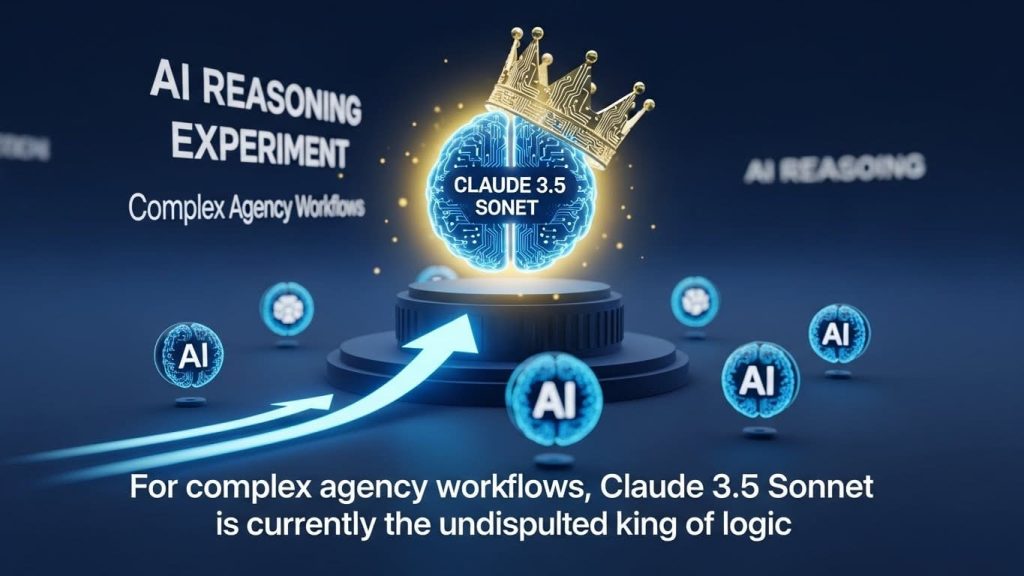
Conclusion: Which Model Should Your Agency Use?
While GPT-4o is faster and cheaper for simple tasks, our experiment proves that for Complex Workflows and reliable CRM data, Claude 3.5 is the superior choice.
Want to see the raw data? Check our Tutorials & Playbooks to see the exact system we used for this test, or get the Prompt Templates we used to run this experiment.
Experiment Claude 3.5 vs. GPT-4o CRM Data
Personalization at Scale: How AI Improves CRM Conversions
Personalization is the holy grail of marketing… but manually tagging 5,000 leads is a nightmare.
AI changes the game. It allows you to personalize based on behavior (intent, value, timing), not just static fields.
For the global AI marketing strategy, read the pillar:
➡️ AI Redefines Digital Marketing: Winning Strategies
1) The 4 Pillars of AI-Powered CRM
| Pillar | What it does | Why AI is better |
|---|---|---|
| 1. Dynamic Segmentation | Groups users by actions (pages viewed, frequency). | Updates in real-time (no manual tagging). |
| 2. Lead Scoring | Identifies who is “hot” right now. | Analyzes 100+ data points vs. 5 manual rules. |
| 3. Recommendations | Suggests next product/content. | “Netflix style” logic applied to your business. |
| 4. Smart Automation | Triggers emails/SMS based on context. | Sends the right message at the right time. |
2) Prerequisite: Clean Data (or Chaos)
Without data discipline, AI amplifies the mess. Before automating, fix this:
- Standardize fields (Source, Industry, Pipeline Stage).
- Track key events (Demo request = 10 pts, Email Open = 1 pt).
- Consent management (GDPR/CCPA).
To learn how to predict who will buy based on this data:
➡️ Predictive Analytics with AI: Forecasting Trends
3) Ready-to-Deploy Scenarios (B2B & B2C)
🏢 B2B: The “Nurturing” Engine
Scenario: A lead visits your “Pricing” page 3 times but hasn’t booked a demo.
- Old way: Send generic “Any questions?” email.
- AI way: Detect intent → Send case study specific to their industry → Alert Sales Rep to call.
🛍️ B2C: The “Win-Back” Machine
Scenario: Customer inactive for 60 days, high LTV.
- AI way: Analyze past purchases → Generate personalized offer (e.g., “20% off your favorite shampoo”) → Send via SMS (preferred channel).
Need content to fuel these emails? Use this workflow:
➡️ AI for Content Creation: Tools & Best Practices
4) The Secret: “Modular Content”
You can’t personalize if you only have one version of an email.
AI CRM requires Modular Content:
- 1 Core Message: “Check out our new feature.”
- 3 Angles: Price-focused, Time-saving, ROI-focused.
- 3 Intent Levels: Awareness, Consideration, Decision.
AI picks the right combo for each user automatically.
5) KPIs: Are you actually winning?
Stop looking at Open Rates. Look at Revenue Metrics:
- Conversion Rate per Segment (Are high-score leads closing?)
- Churn Rate (Is AI identifying at-risk users early enough?)
- LTV Growth (Are personalized offers increasing basket size?)
Conclusion
AI-augmented CRM isn’t an option anymore. It’s the only way to align Message + Timing + Channel with real user intent.
Predictive Analytics with AI: Forecasting Trends and Decisions
Marketing is usually reactive: you look at last month’s report and try to fix it.
Predictive Analytics flips the script. It uses your historical data to tell you what will happen next.
It’s not magic; it’s math. And AI makes it accessible to everyone, not just data scientists.
For the global AI marketing strategy, read the pillar:
➡️ AI Redefines Digital Marketing: Winning Strategies
1) Reporting vs. Predictive: What’s the Difference?
| Reporting (Look Back) | Predictive (Look Forward) |
|---|---|
| “We lost 10% of customers last month.” | “We will lose 15% of customers next month unless we act.” |
| “This ad had a high CTR.” | “This audience will have a high LTV.” |
| Question: What happened? | Question: What will happen? |
2) The 3 Use Cases with Highest ROI
You don’t need to predict everything. Start with these three:
🛑 1. Churn Prediction (Save Revenue)
Identify customers who are about to leave before they actually do.
- Signal: Drop in login frequency + negative support ticket.
- Action: Trigger a “We miss you” offer automatically.
- Connected to CRM: ➡️ Personalization at Scale: How AI Improves CRM
📈 2. Demand Forecasting (Optimize Inventory/Content)
Know what people will want next month.
- Signal: Seasonality + current search trends.
- Action: Write content or stock products before the rush.
💰 3. Lead Scoring (Focus Sales Efforts)
Which leads will actually buy?
- Signal: Visited pricing page + downloaded case study.
- Action: Sales calls them immediately.
3) How to Start (No Data Scientist Required)
You don’t need fancy Python models. You need clean data.
Step 1: Centralize your data
Stop having data in Ads, Analytics, and Email separately. Put it in a CRM or Data Warehouse.
Step 2: Define your “Success Metric”
What are you trying to predict? (e.g., “Will they buy in 30 days?”)
Step 3: Feed the AI
Use tools like HubSpot, Salesforce Einstein, or even simple regression tools in Excel/Looker Studio. Feed it:
- Past purchases.
- Website activity.
- Email engagement.
Step 4: Act on the Score
- Score 0-30 (Low): Nurture via email.
- Score 70-100 (High): Call them or retarget with a hard offer.
4) The “Golden Rule” of Predictive Analytics
Garbage In = Garbage Out.
If your tracking is broken (e.g., you lost 40% of data due to cookie consent), your predictions will be wrong.
- ✅ Fix your tracking pixels first.
- ✅ Standardize your UTMs.
- ✅ Clean your database.
5) Connect Predictions to Ads (The Real Money Maker)
This is where it gets interesting. You can upload your Predictive Audiences (High LTV, Low Churn) directly into Google and Meta.
Instead of targeting “Interests,” you target “People who behave like my best customers.”
To learn how to target these audiences:
➡️ AI and Ads: Optimizing Google Ads and Meta Ads
Conclusion
Predictive analytics turns marketing from a “cost center” into a “revenue driver.” You stop hoping for sales and start engineering them.
Building Self-Healing Sales Funnels for 24/7 Revenue Capture
A broken link or a slow response time is a silent killer for your bottom line. Traditional funnels require constant monitoring, but the shift toward autonomous business systems allows for a more resilient architecture. These self-healing setups identify friction points and trigger corrective actions in real-time. When your sales process can recalibrate itself based on incoming lead behavior, you move from chasing revenue to managing an inevitable flow of conversions that never sleeps.
Eliminating the bottleneck of manual follow-up
Most sales funnels die because humans are slow. A lead comes in at 2:00 AM and sits in an inbox until a rep logs in at 9:00 AM. By then, the intent has cooled. A self-healing funnel removes this latency by piping lead data directly into automated response sequences that adapt based on the prospect’s profile. If a high-value lead doesn’t engage with the first touchpoint, the system detects the silence and shifts the strategy automatically. You are no longer relying on a salesperson’s memory to keep the deal alive.
Architecture for autonomous revenue capture
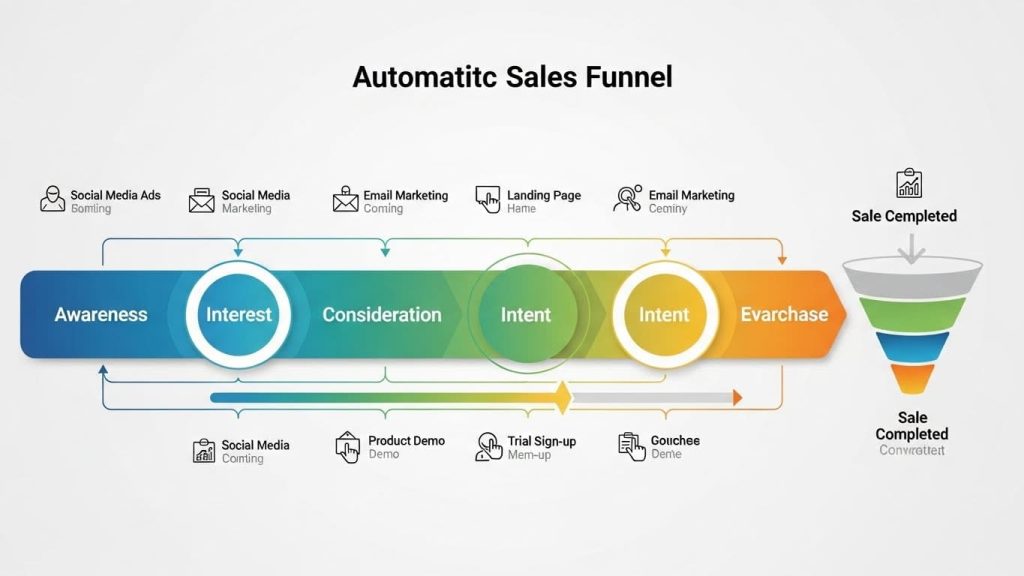
Building a funnel that fixes itself requires a deep integration between your front-end capture and your back-end logic. You need to map out every possible exit point a customer might take. When the system sees a drop-off at the pricing page, it can trigger a specific case study or a targeted FAQ to address the friction. This level of conversion optimization ensures that the funnel is constantly plugging its own leaks. You aren’t just running traffic; you are engineering a machine that optimizes its own performance.
Dynamic lead scoring and routing
Not all leads are created equal, and your funnel should know that. By integrating sophisticated lead scoring into the flow, the system can prioritize prospects based on their behavior and firmographics. If a CEO from a Fortune 500 company enters the funnel, the system bypasses standard nurtures and triggers an immediate high-priority alert. This ensures your resources are always focused on the highest ROI opportunities. The system manages the volume so your team can focus on the value.
Scaling velocity through system resilience
The beauty of an autonomous funnel is its ability to handle sudden spikes in traffic without breaking. Because the logic is handled by infrastructure rather than individuals, doubling your lead flow doesn’t double your workload. The system remains stable, processing data and moving prospects toward a close with surgical precision. This resilience allows you to spend more on customer acquisition with the confidence that your back-end can actually convert the interest into revenue.
Conclusion Stop building static pages and start engineering dynamic systems. A funnel that requires a human to move a lead from stage A to stage B is a liability in 2026. Once your revenue capture is on autopilot, you can focus on the operational backbone of your company, such as implementing real-time reporting to track your growing margins with total clarity.
Customer Success on Autopilot: AI-Powered Retention Systems
Reactive support is a cost center; proactive success is a profit engine. If you wait for a ticket to arrive, you have already failed the retention test. Integrating your support stack into broader autonomous business systems allows you to detect churn signals before they manifest. By automating the onboarding and check-in process, your system acts as a persistent concierge that nurtures the user relationship, allowing your human success managers to handle only the most complex accounts.
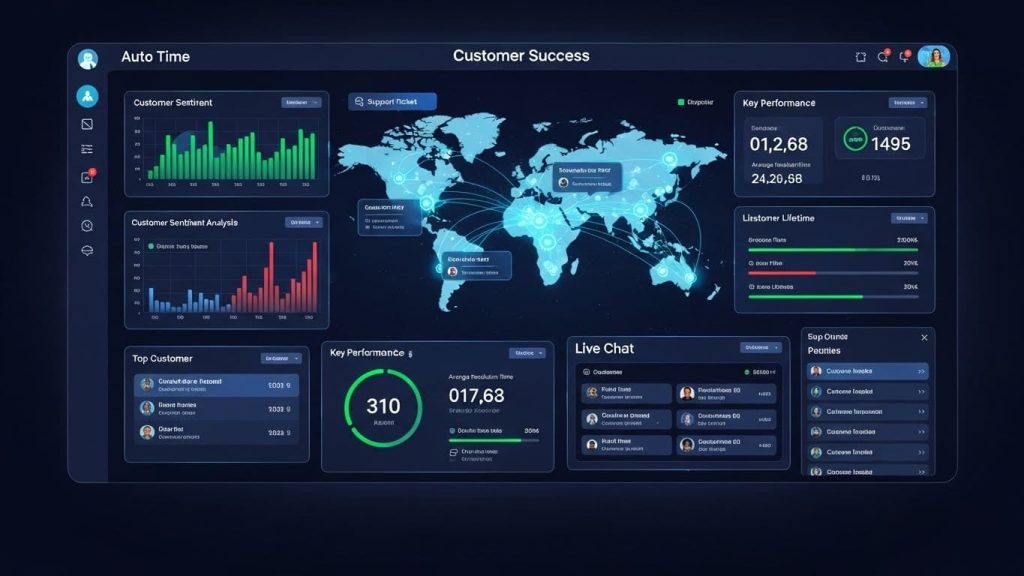
Detecting churn before the cancellation The moment a user stops engaging with core features, the clock starts ticking. Traditional success teams only notice this when it is too late—during the renewal conversation. An autonomous success engine monitors health scores in real-time. If a key account’s activity drops below a specific threshold, the system triggers a personalized outreach or a technical “nudge” to get them back on track. You are not just solving problems; you are preventing them from existing in the first place.
The automated onboarding experience
First impressions are the only impressions that count in a digital product. If your onboarding requires a human to schedule a call, you are creating friction. By piping user data into an automated onboarding flow, the system delivers the right training at the exact moment the user needs it. This ensures that every customer reaches their “Aha!” moment faster. By integrating this with your lead routing logic, you can identify which users need a personal touch and which can be successfully offboarded through automated logic alone.
Scaling personalized communication
Personalization is usually the first casualty of scale. However, when your customer data is piped into your communication tools, you can maintain a high level of relevance for thousands of users simultaneously. The system can reference specific usage patterns, account milestones, and even industry benchmarks in its automated check-ins. This creates a high-touch feel without the high-touch cost. Your customers feel seen and supported, while your team spends their time on strategic expansion rather than basic troubleshooting.
Building a feedback loop into product development
An integrated success system does more than just keep customers; it informs the future of your company. By automatically tagging and categorizing common friction points, the system provides your product team with a roadmap of what needs to be fixed. This turns every support interaction into a data point for growth. You stop guessing what your users want and start building exactly what they need based on the clear signals your autonomous infrastructure is collecting 24/7.
Conclusion Transitioning to an autopilot success model allows your business to scale its impact without sacrificing the user experience. Retention becomes a byproduct of your system’s design rather than a result of manual effort. Once your customer relationships are secured, you can focus on the technical side of your growth, specifically building real-time capital tracking through automated financial loops.
Autonomous Financial Operations for Modern Firms
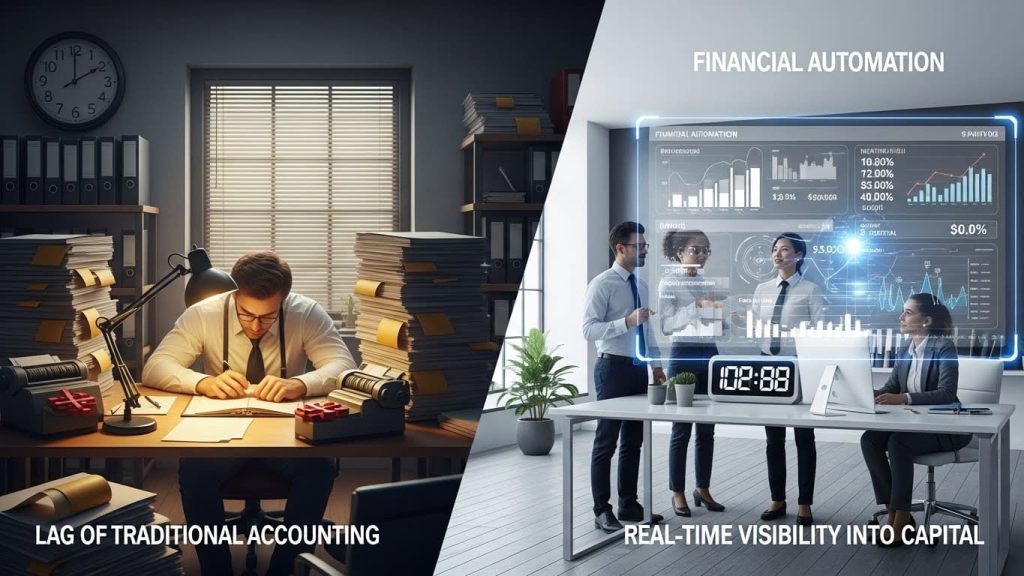
Waiting thirty days to see your profit and loss statement is a recipe for disaster in a high-velocity market. You need the transparency that only autonomous business systems can provide to your treasury. Automated reconciliation and expense tracking turn your finance department from a historical record-keeper into a forward-looking navigator. When every dollar is tracked and verified by a system loop, your leadership team gains the confidence to reinvest capital with surgical precision.
Eliminating the month-end closing grind
The tradition of “closing the books” at the end of the month is an outdated bottleneck. In an integrated firm, the books are always closed. By piping bank feeds and payment gateways directly into your ledger with automated verification, you eliminate the need for manual data entry. The system matches invoices to payments in real-time, flagging only the discrepancies for human review. This shifts your finance team away from tedious bean-counting and toward high-level capital allocation.
Real-time capital and liquidity visibility I
f you don’t know your exact cash position at 2:00 PM on a Tuesday, you are flying blind. Autonomous financial systems provide a live dashboard of your liquidity, allowing you to make aggressive moves when market opportunities arise. By integrating inventory forecasting and sales projections into your cash flow model, the system can predict future shortfalls or surpluses with startling accuracy. You stop reacting to bank balances and start managing your company’s “fuel” with total foresight.
Automating the compliance and audit trail
Compliance shouldn’t be a frantic scramble at the end of the year. An automated FinOps stack creates an immutable audit trail for every transaction as it happens. Each expense is categorized and linked to a digital receipt automatically, ensuring that your records are always tax-ready. This level of automated reconciliation protects the business from internal errors and external audits. You build a foundation of trust in your data that allows for faster scaling without the fear of financial mismanagement.
Strategic reinvestment and profit optimization
The ultimate goal of financial automation is to increase your funnel velocity by knowing exactly where your margins are strongest. When the system can attribute every dollar spent to a specific outcome in real-time, you can prune underperforming channels instantly. You are no longer guessing which marketing campaigns or product lines are profitable. The system provides the verdict, and you provide the strategy. This is how lean companies outmaneuver bloated competitors with ten times the budget.
Conclusion Fixing your finances is about more than just numbers; it is about the speed of your decision-making. Once your capital is moving through automated pipes, you can focus on the human side of the equation. This leads directly to building high-performance teams using churn reduction strategies and automated talent systems to ensure your growth is sustainable.
Deploying AI for Autonomous Supply Chain Management
Fragile supply chains are a relic of the past. If you are still reacting to shortages instead of predicting them, you are losing the margin war. Modern logistics require the deep integration found in autonomous business systems to synchronize inventory with global demand shifts. By treating your supply chain as a neural network of data points, you can automate procurement and fulfillment cycles, ensuring your physical operations move as fast as your digital ones.
The shift from reactive to predictive logistics
The old way of managing inventory relied on spreadsheets and “gut feelings” from warehouse managers. That doesn’t scale in a volatile market. You need a system that reads market signals—shipping delays, raw material costs, and seasonal demand—and adjusts your orders before you hit a zero-stock event. When you treat your supply chain like a neural network, every node informs the others. A delay at a port in Asia should automatically trigger a recalibration of your fulfillment timelines in the US without a single manual update.
Automating the procurement loop
Piping logic into your vendor management allows for inventory forecasting that actually works. You can set up triggers where your system negotiates or places orders once certain stock thresholds are met. This removes the risk of human error or oversight. By integrating your logistics directly into your financial stack, you ensure that every purchase order is backed by real-time data and budget availability. You stop chasing suppliers and start managing an automated flow of goods that responds to real-time sales velocity.

Synchronizing warehouse and sales data
One of the biggest friction points in a growing company is the gap between what the sales team promises and what the warehouse has in stock. An autonomous system bridges this gap instantly. As soon as a high-volume deal is closed in your CRM, the inventory is reserved and the logistics chain is activated. This level of synchronization ensures that your customer experience remains consistent even during periods of rapid growth. Your operations become a competitive advantage rather than a bottleneck.
Engineering resilience into physical operations
Resilience isn’t just about having extra stock; it is about having the intelligence to move it where it is needed most. An integrated system can analyze shipping costs and delivery times across multiple carriers in milliseconds, choosing the most efficient route for every individual parcel. This reduces your carbon footprint and your overhead simultaneously. You are building a system that learns from every shipment, constantly optimizing for speed and cost-efficiency while your competitors are still manually checking tracking numbers.
Conclusion The goal is to remove the “guesswork” from the physical side of your business. When your logistics are handled by a robust logic engine, you can scale your sales without fearing an operational collapse. Once your supply chain is running on autopilot, you can turn your attention to proactive support systems to ensure that those products lead to long-term customer loyalty and repeat business.
Engineering Talent Acquisition Engines for High-Growth Teams
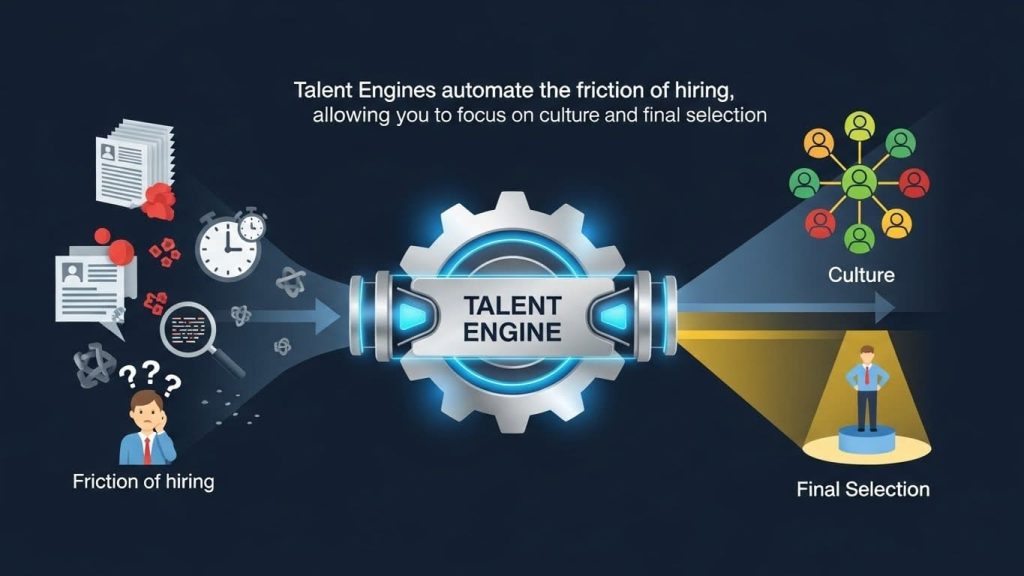
The bottleneck of every scaling company is the speed of its hiring. If your HR team is bogged down by manual screening, your growth is capped. Leveraging autonomous business systems in your recruitment allows you to score, filter, and schedule candidates without a single human click. This engine ensures that your pipeline is always full of high-quality talent, ready for the final interview, effectively turning talent acquisition into a predictable utility rather than a frantic search.
Removing the manual screening bottleneck
If a human has to read every resume that hits your inbox, you have already lost the talent war. Top-tier candidates are off the market in days, not weeks. An autonomous recruitment engine uses predefined logic to parse applications and rank them against your specific technical requirements. By integrating this with your lead scoring mechanisms, you treat potential hires with the same urgency as potential customers. The system surfaces the top 1% of talent immediately, allowing your team to spend their time interviewing instead of sorting through PDF files.
The automated candidate journey
Candidate experience is a direct reflection of your internal operations. A slow, silent hiring process signals a slow, disorganized company. Piping your recruitment stack into automated communication loops ensures that every applicant receives instant feedback. From initial screening questions to technical assessments and interview scheduling, the system manages the logistics. This level of automated onboarding starts long before the first day of work, building a professional brand that attracts elite performers who value efficiency.
Data-driven culture and performance matching
Hiring is often treated as a “gut feeling” exercise, which leads to high turnover and expensive mistakes. By using system-level integration, you can cross-reference candidate profiles with the performance data of your current top performers. The system identifies patterns in successful hires that humans often miss. This ensures data hygiene in your HR records and creates a feedback loop where each new hire improves the accuracy of the next search. You stop guessing who will fit and start hiring based on proven success metrics.
Engineering a self-sustaining talent pipeline
A truly autonomous hiring engine doesn’t stop when a role is filled. It continues to nurture silver-medal candidates—those who were qualified but didn’t get the job this time—for future openings. By maintaining a living database of vetted talent, you reduce your future time-to-hire to near zero. You are no longer starting from scratch every time you need to scale a department. The engine remains active in the background, ensuring your company’s growth is never throttled by a lack of human capital.
Conclusion Building a talent engine is the final piece of the autonomous enterprise puzzle. It ensures that as your systems grow, you have the right people in place to direct them. Now that you have seen how individual satellites function, it is time to look at the holistic strategy for autonomous business systems to understand how these interconnected parts create a truly unstoppable organization.