

Content Factories: Multi-Channel Distribution Without Burnout
The modern attention economy is brutal. If you are only posting when you “feel inspired,” you are invisible. But here is the catch: most agency owners kill their productivity by trying to be a full-time content creator. In a lean, million-dollar firm, you don’t create more; you distribute smarter. You need a system that turns one hour of deep thinking into thirty days of omnipresence.
most founders are drowning in a sea of “shoulds.” you think you should be on tiktok, you should be on linkedin, and you should have a newsletter. the result is usually a collection of half-baked posts that drive zero revenue. you are trading your most valuable hours for vanity metrics.
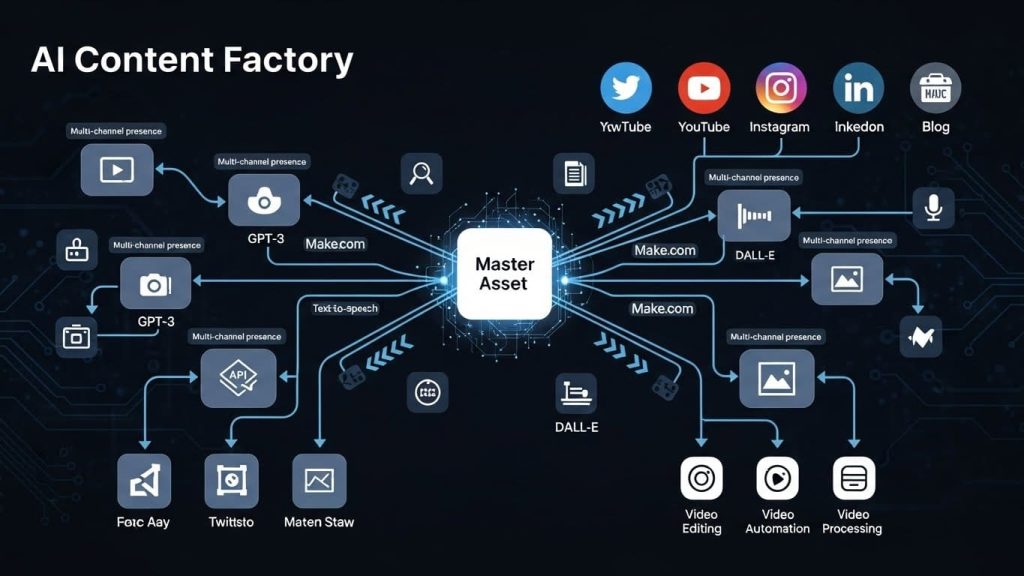
to scale in 2026, you must stop “posting” and start “manufacturing.” by embedding a distribution engine into your AI tech stack for agencies 2026, you can transform a single long-form video or article into a multi-channel authority campaign. this is how you stay top-of-mind for high-ticket prospects without sacrificing your weekends.
the input-to-output ratio
the goal of a content factory is a 1:20 ratio. one high-quality input (like a deep-dive interview or a case study) should yield twenty distinct pieces of content. we are talking about short-form clips, carousel slides, daily emails, and long-form blogs.
the mistake is doing this manually. a lean agency uses automated workflows to handle the transcription, the formatting, and the scheduling. your only job is to provide the “expertise.” the system handles the “exposure.”

engineering your brand’s omnipresence
omnipresence isn’t about being everywhere for everyone; it’s about being everywhere for your ideal client. when a prospect sees your insight on linkedin, then reads your deep-dive email, then sees a clip on youtube, they don’t think “automation.” they think “authority.”
- the core asset: start with a high-value piece of pillar content (video or text).
- automated atomization: use logic-based tools to break that pillar into smaller “atomic” units—quotes, tips, and observations.
- platform-specific styling: your system should automatically adjust the tone and format for each platform (e.g., professional for linkedin, punchy for x).
moving from engagement to intent
engagement is a vanity metric. revenue is a sanity metric. your content factory shouldn’t just be a noise machine; it should be a lead-capture engine. every piece of content should have a clear path back to your primary offer.
if a specific piece of content gets high engagement, your system should automatically flag it for a paid amplification test. don’t guess what works; let the data from your distribution engine tell you where to double down.
conclusion: authority is manufactured, not found
nobody is coming to discover you in the basement of the internet. you have to build the bridge to your audience. a content factory ensures that your expertise reaches the right eyes every single day, regardless of how busy you are with client work.
once your brand is everywhere, your next challenge is managing the influx of new business. the only way to maintain the same level of quality at scale is through automated client onboarding processes that deliver a world-class first impression.