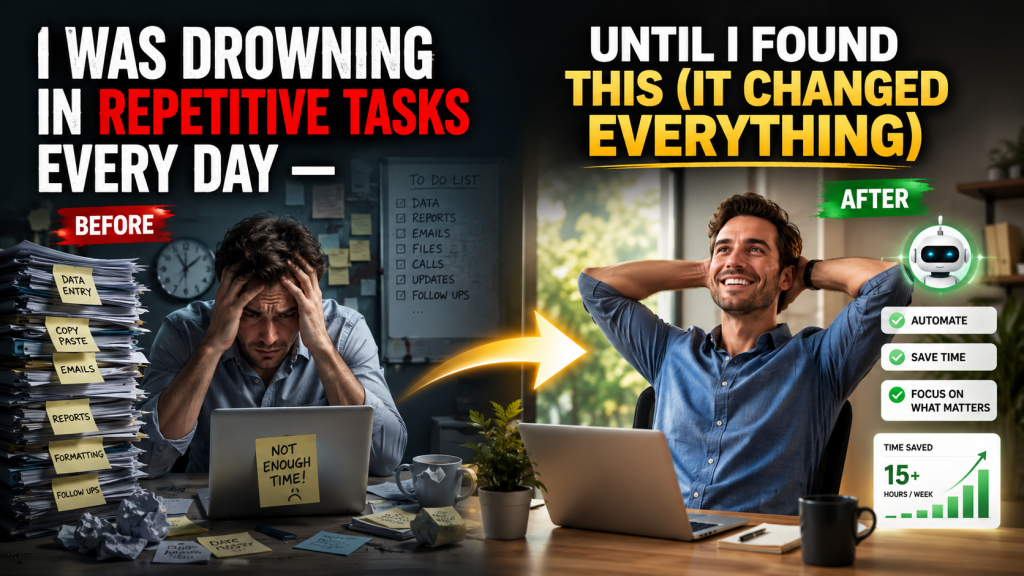


Tech stack lean agencies — 2026 ai tech stack is one of the most important topics in AI and automation in 2026. The “hiring spree” model of the 2010s is officially a liability. In 2026, profit is found in what you don’t do. The most successful agencies on the planet are no longer defined by the size of their office or the count of their headcount, but by the elegance of their infrastructure. If you are still trading human hours for recurring tasks, you aren’t building an enterprise; you are managing an expensive bottleneck.
This guide is for those who understand that the AI tech stack for agencies 2026 is the only real path to $1M+ revenue with a lean, elite team. We are moving past the “experimental” phase of automation and into the era of the Sovereign Stack—where your systems handle the labor and your people handle the strategy.
The Core Infrastructure: Building Your Sovereign Operating System

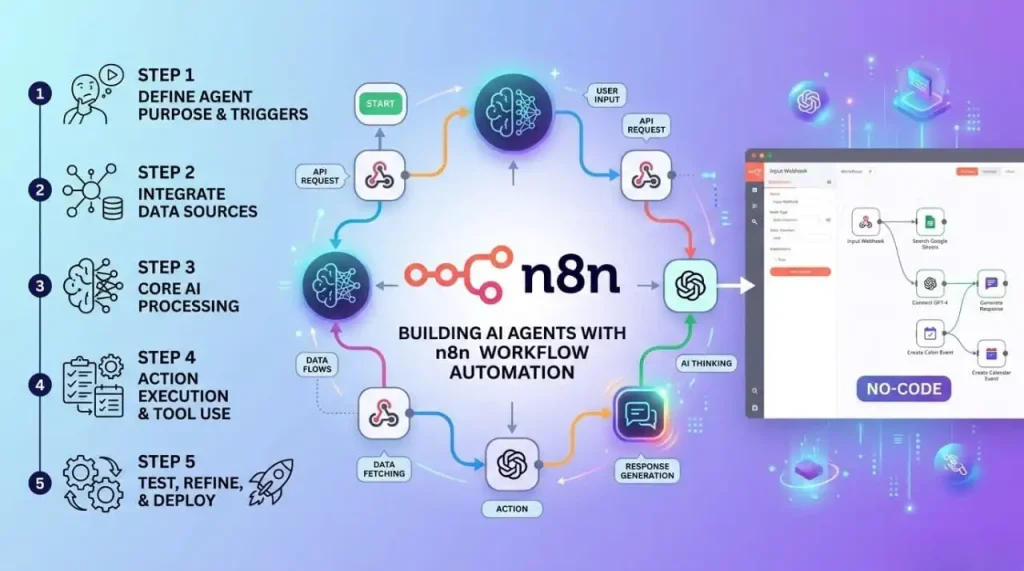
A lean agency is only as strong as its weakest manual link. Most founders are “tool-rich but system-poor.” They have subscriptions for everything but integration for nothing. Your core infrastructure must act as a single source of truth, a digital nervous system that triggers actions across your entire firm without human intervention.
In 2026, your infrastructure isn’t just a place to store files; it’s a place to activate them. When you align your firm with the right foundation tools for AI-first operations, you eliminate “human middleware.” You stop being the person who moves data from Point A to Point B. You become the architect who designs the flow.
The objective is to consolidate. You need a unified hub where communication, tasking, and data archiving exist in a logic-based loop. When a client sends an email, your system should know which project it belongs to, which task it updates, and whether it requires a high-level response or an automated acknowledgment. This level of clarity is what allows a founder to focus on a $10,000 move instead of a $20 task.
If your current stack feels “heavy” or fragmented, you aren’t ready to scale. You are just preparing to break. True growth begins when your infrastructure is so quiet that you almost forget it’s there, working 24/7 in the background of your business.
if your current stack feels “heavy” or fragmented, you aren’t ready to scale. you are just preparing to break. true growth begins when your infrastructure is so quiet that you almost forget it’s there, working 24/7 in the background of your business.
2. Lead Generation Systems: Engineering a Predictable Sales Engine

The era of “spray and pray” cold outreach is over. In a lean agency, you don’t have the time to chase low-intent leads or deal with tire-kickers. Your lead generation must be an automated filter that protects your schedule. By building automated lead generation systems, you shift the burden of prospecting from your team to your tech stack.
This system works by identifying intent before you ever send an email. We use data signals—web visits, content engagement, and industry triggers—to decide who gets our attention. When a prospect matches our ideal client profile, the system triggers a multi-touch sequence that feels personal but scales infinitely.
- Intent Mining: Finding prospects who are already looking for a solution.
- Logic-Based Qualification: Diverting low-budget leads to resources while fast-tracking high-ticket prospects.
- Autonomous Booking: Syncing your pipeline directly with your calendar.
Your pipeline should be a “black box” where cold traffic goes in and qualified meetings come out. This isn’t just about volume; it’s about the velocity of your growth. When you stop manual prospecting, you buy back the mental energy needed to solve the big problems for the clients you already have.
Once the pipeline is flowing, the challenge shifts to keeping those prospects engaged without becoming a full-time content creator. You need a way to stay top-of-mind across every channel, which brings us to the necessity of a high-output distribution system.
3. Content Factories: Manufacturing Omnipresence on Autopilot

Most agency owners are invisible because they are inconsistent. They post when they have time, which is never. To dominate your niche, you must shift from manual posting to automated manufacturing. When you integrate a distribution engine into your AI tech stack for agencies 2026, you stop trading time for attention.
Building automated content distribution workflows allows you to take one high-level insight—a client call, a case study, or a deep-dive video—and atomize it. That one asset is automatically sliced into LinkedIn posts, X threads, and email newsletters. This ensures that your ideal prospects see your expertise every single day, on every platform they inhabit, without you ever opening a social media app.
- Source Input: Capture one high-value session per week.
- Automated Atomization: Let the system break it into 20+ “atomic” content units.
- Scheduled Saturation: Deploy the content across channels in a logic-based sequence.
This is how a one-person or three-person team looks like a global firm. It’s about leverage. You provide the “brain,” and the system provides the “reach.” By the time a prospect gets on a call with you, they should already feel like they know your philosophy because they’ve seen it everywhere.
When your content factory starts working, your inbox will fill up. The next bottleneck isn’t getting the client—it’s getting them started. You cannot afford to let manual admin slow down your momentum during the most critical phase of the relationship.
AI-Driven Onboarding: The High-Speed Welcome

The “honeymoon phase” is when your client is most excited and most anxious. Most agencies kill that excitement with a slow, administrative slog. By utilizing automated client onboarding processes, you eliminate the friction of data collection. You move from “payment received” to “work started” in minutes, not days.
In 2026, the goal is zero-touch onboarding. Your system should handle the heavy lifting: sending the contract, triggering the invoice, creating the Slack channel, and setting up the project dashboard—all before you’ve even finished your morning coffee. This isn’t just about saving you time; it’s about establishing absolute authority.
- Instant Portal Access: Give them their digital home immediately.
- Logic-Based Asset Collection: Only ask for what you need, when you need it.
- Automated Project Provisioning: Folders, tasks, and permissions created via code, not clicks.
When a client sees this level of precision, they stop worrying about whether you’ll deliver. You’ve already proven you operate at a different level. This sets a standard of efficiency that discourages micro-management and builds long-term loyalty.
With the client successfully onboarded and the work moving, your next task is the most vital for retention: proving that your system is actually making them money. You need a way to show the ROI without spending your Fridays in Excel.
Real-Time ROI: Proving Value Without the Friday Grind

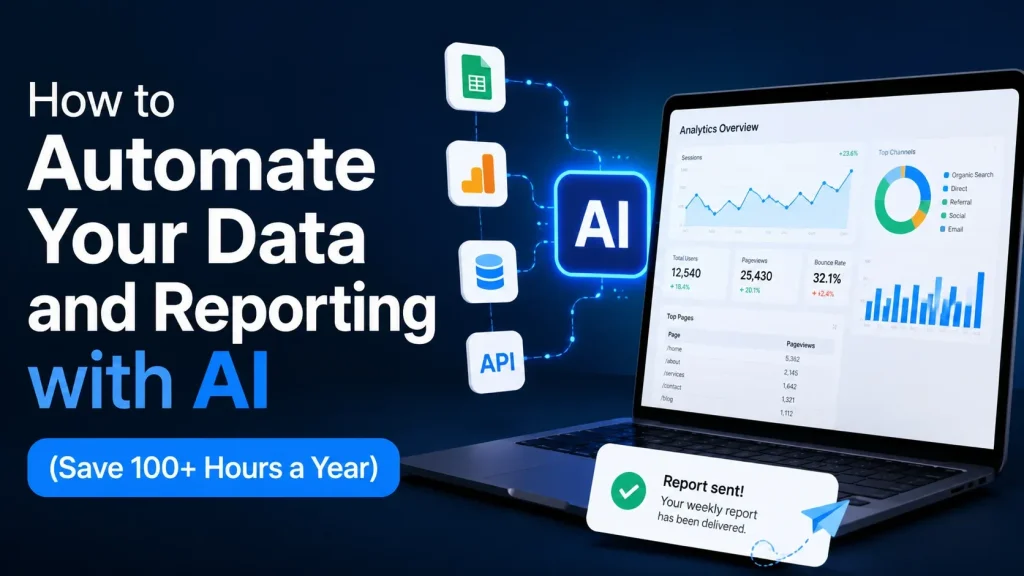
The 2026 business owner has zero patience for “monthly reports” that arrive two weeks late. They want to see the pulse of their investment daily. By implementing automated reporting and ROI tracking, you remove the “black box” of agency work. You replace vague promises with hard, immutable data.
A million-dollar lean agency operates on a “live-link” philosophy. Instead of sending PDF attachments that get buried in inboxes, you provide a dynamic dashboard. This dashboard pulls directly from your AI tech stack for agencies 2026 to show the metrics that actually move the needle: CPA, CLTV, and Net Profit.
- Direct Data Pipelines: No manual entry. Data flows from the source (Ads, CRM, Stripe) directly to the client view.
- Automated Win-Detection: Your system should automatically highlight positive trends with emerald green markers, ensuring the client notices the growth.
- Proactive Alerts: If a KPI dips, the system alerts you internally before the client even sees it, allowing for proactive adjustments.
When you automate your proof-of-value, you buy back your Fridays. More importantly, you build a relationship based on radical transparency. This makes your agency “sticky”—clients won’t leave because they can’t imagine going back to the dark ages of manual reporting.
Proving value is the key to longevity, but scaling that value requires a cold, hard look at the math. To keep your agency lean and your margins fat, you must master the economics of your tools. It’s time to talk about the budget.
The Tech Stack Budget: Investing in Scalable Efficiency

A million-dollar lean agency doesn’t have a “software bill”; it has a “systems investment.” If you are still looking at your SaaS dashboard as a list of expenses, you are missing the point. Every dollar you put into your AI tech stack for agencies 2026 should act as a force multiplier. If a tool doesn’t save you ten hours a month or generate $1,000 in revenue, it’s noise.
When you analyze the cost of AI tools for business, you have to look at the “Opportunity Cost of Manual Labor.” If you pay a project manager $5,000 a month to move tasks around, but a $500 automated workflow can do the same job with zero errors, the “expensive” software is actually the cheapest hire you’ll ever make.
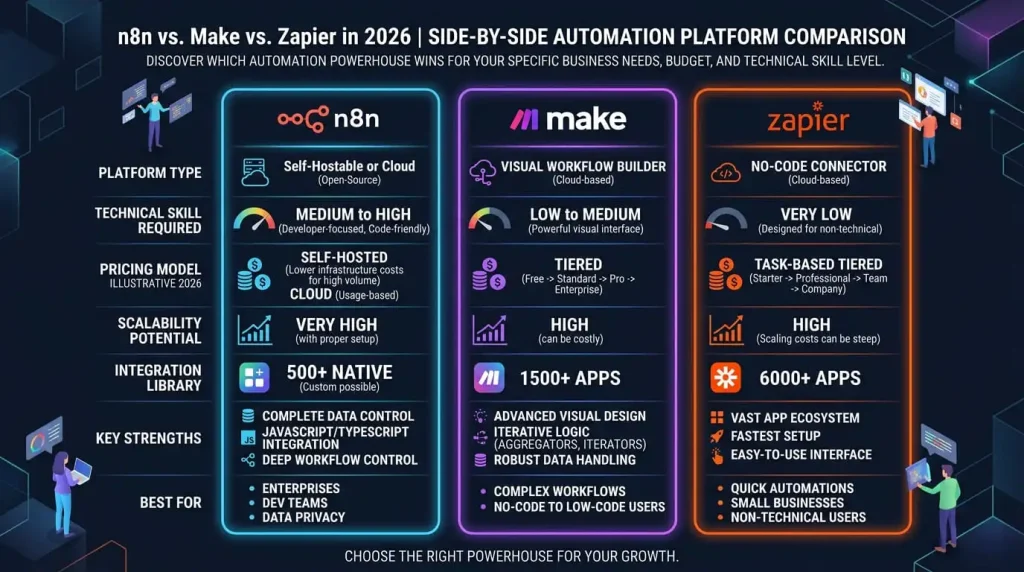
- The Core Investment: Budget for a “best-of-breed” stack that prioritizes deep API connectivity over “all-in-one” mediocrity.
- The Integration Tax: Avoid tools that require constant manual babysitting. If it doesn’t talk to the rest of your stack, it’s a liability.
- Future-Proofing: Invest in platforms that allow you to export your data and own your workflows. Data sovereignty is the ultimate business insurance.
Your goal is a “Sovereign Stack”—a lean, mean collection of high-performance tools that allow you to out-produce agencies ten times your size. You don’t need a massive budget; you need a precise one. Every cent should be aimed at buying back your time so you can focus on the high-level strategy that actually drives the $1M+ exit.
From the Desk of Alex, CAO at AIWiner:
The shift is no longer coming; it’s here. In 2026, the market doesn’t reward the “busy” founder; it rewards the “architected” one. If you leave this guide and continue to manage your agency through brute force and manual labor, you are choosing a ceiling that your competitors are already smashing through with logic.
Conclusion: The Sovereign Agency is the Only Way Forward
We’ve deconstructed the entire engine. From the foundation tools for AI-first operations that keep your business stable, to the automated lead generation systems that keep it growing, the blueprint for a million-dollar lean agency is now in your hands.
The goal was never to just “use AI.” The goal was to build a Sovereign Stack—a business that operates with elite precision, delivers world-class ROI, and buys back the founder’s freedom. You now have the roadmap to:
- Automate your authority with a content distributi*on system.
- Secure your clients with high-speed automated onboarding.
- Retain your revenue with real-time ROI tracking and reporting.
- Optimize your profit by mastering the tech stack budget.
Success in the next era of business belongs to those who own their systems. Stop being the engine and start being the driver. Your competitors are already automating; the only question is whether you will lead the disruption or be the one disrupted.
The silo is complete. The links are live. The strategy is blunt. Now, execute.