

The era of simple, rule-based automation is over. While tools like Robotic Process Automation (RPA) and standard chatbots have offered incremental gains in efficiency, a new paradigm of intelligent systems is emerging: Autonomous AI Agents.
These aren’t just glorified tools; they are the next evolution of AI in the workplace. Autonomous AI agents are systems capable of perceiving their environment, setting goals, making independent decisions, and executing complex, multi-step tasks without continuous human oversight. For businesses targeting high growth and productivity in the US market, understanding and implementing this technology is no longer optional—it is critical for competitive advantage.
What Defines an Autonomous AI Agent?
Traditional automation systems execute a set of pre-defined instructions (e.g., “If X happens, do Y”). AI agents, however, operate using a more complex loop that mimics human reasoning and learning.
Their core architecture relies on three foundational components:
- Reasoning and Planning: Using Large Language Models (LLMs) like GPT-4 or Gemini, the agent breaks down a high-level goal (e.g., “Launch a Q4 marketing campaign”) into smaller, actionable steps.
- Memory and Context: Agents maintain both short-term context (the current conversation/task) and long-term memory (past experiences, knowledge base, successful strategies) to inform future decisions.
- Tool Use and Execution: Agents are empowered to use external tools, APIs, and software (like Salesforce, Google Sheets, or internal databases) to interact with the real world and complete their planned actions.
This combination allows agents to perform tasks with a level of adaptability and context-awareness previously reserved for human employees.
The Shift from Automation to “Agentic” Workflow
The fundamental difference between traditional automation and agentic workflow lies in the degree of autonomy and complexity:
| Feature | Traditional Automation (RPA/Basic Chatbot) | Autonomous AI Agent |
|---|---|---|
| Control | Rule-based, supervised, deterministic. | Goal-oriented, self-correcting, adaptive. |
| Task Complexity | Simple, repetitive, single-step tasks. | Complex, multi-step, cross-functional projects. |
| Decision Making | Follows hard-coded rules. | Reasons, plans, and makes dynamic decisions. |
| Learning | Requires human reprogramming to change. | Learns from success/failure and improves over time. |
By offloading entire segments of a workflow—not just single steps—agents drive significant productivity boosts, often freeing up human employees to focus solely on high-value, creative, and relationship-building tasks.
High-Impact Use Cases for US Businesses
The application of AI agents is rapidly expanding across every department, but certain areas are seeing the most immediate and measurable returns:
1. Customer Experience and Support
Autonomous customer service agents are moving beyond simple FAQ responses. They can now:
- Proactively Resolve Issues: Monitor system logs for issues (like a failed payment or delayed shipment), initiate a support ticket, communicate the problem to the customer, and begin the resolution process—all before the customer even notices.
- Handle Complex Workflows: Navigate multi-system environments (CRM, ERP, Billing) to process returns, update subscriptions, or apply credits without human intervention.
- Deliver Hyper-Personalization: Access customer history and sentiment analysis to tailor support conversations and product recommendations in real-time. (This is a great tie-in point for the first Satellite Article).
2. Sales and Marketing Automation
In competitive US markets, speed and personalization are paramount. AI agents are accelerating the sales funnel:
- Lead Qualification & Nurturing: Agents autonomously research prospects, score leads based on fit and intent signals, and execute personalized email sequences until a prospect shows strong engagement, then seamlessly hand off to a human SDR. (This ties into the third Satellite Article).
- Market Research: Continuous agents monitor competitor pricing, analyze trend shifts across social media and news feeds, and compile executive summaries on market opportunities weekly.
3. IT and Operations Management
For internal efficiency, agents are indispensable for continuous, low-level monitoring:
- Code Review and Deployment: AI agents can audit pull requests for security vulnerabilities, enforce coding standards, and automate continuous integration/continuous deployment (CI/CD) pipelines.
- Supply Chain Optimization: Agents monitor real-time inventory levels, predict demand fluctuations, and automatically place reorder requests or flag suppliers based on predicted lead times and geopolitical risks.
The Future: Multi-Agent Collaboration
The true power of this technology lies in multi-agent systems, where specialized agents collaborate to achieve a single, large goal.
Imagine a scenario where you task a Project Manager Agent to “Launch a new product line.”
- The PM Agent delegates tasks to a Marketing Agent, a Finance Agent, and a Supply Chain Agent.
- The Marketing Agent researches keywords and writes ad copy.
- The Finance Agent runs a profitability analysis and secures budget approval.
- The Supply Chain Agent verifies inventory and logistics.
These agents communicate, share information, and self-correct based on feedback, turning a weeks-long human project into a fully orchestrated digital collaboration.
Getting Started: Implementation and Strategy
Adopting autonomous AI requires strategic planning:
- Start Small: Identify one highly repetitive, cross-functional workflow (e.g., expense report processing or lead qualification) and deploy a small agent pilot.
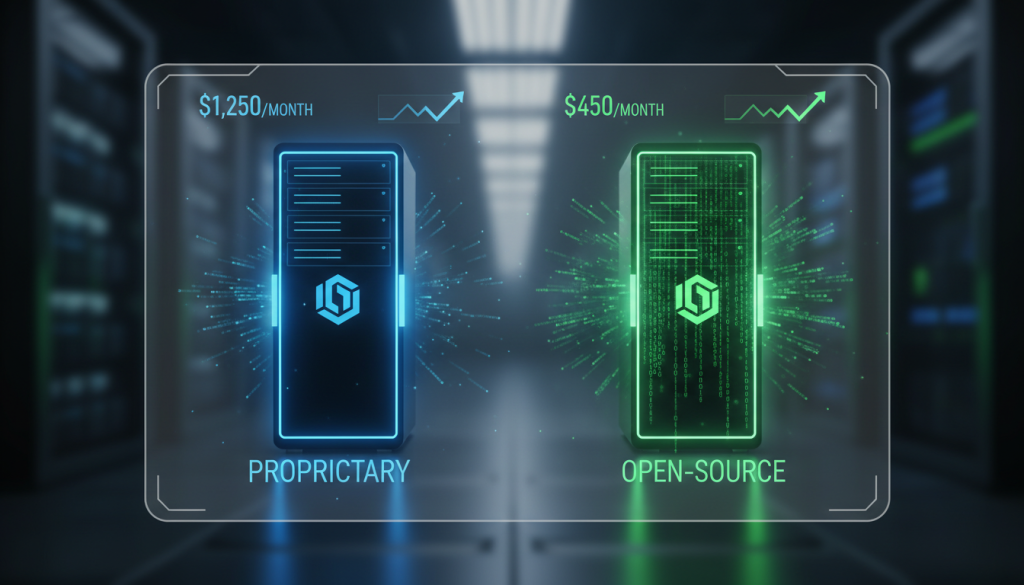
- Choose Your Framework: Decide whether to build using open-source frameworks like LangChain or AutoGen, or leverage enterprise platforms like Microsoft’s Copilot stack or Google’s Gemini Agents API. (This is the topic of the second Satellite Article).
- Establish Governance: Since agents are autonomous, establishing clear ethical boundaries, monitoring dashboards, and human-in-the-loop checkpoints is essential for compliance and risk mitigation.
Autonomous AI agents are not just tools; they are the new workforce architecture. By embracing this shift, businesses can unlock unparalleled levels of efficiency and focus human ingenuity where it matters most: strategic innovation and complex problem-solving.