

Agentic AI for Business in 2026: The Complete Guide to AI Agents That Actually Work
TL;DR: Agentic AI systems receive a goal and execute entire workflows autonomously — no step-by-step instructions needed. Over half of business leaders are already deploying them. Here’s what that actually means, which sectors are transforming first, and how to get started without wasting months on pilots that go nowhere.
Here’s a number that should make you pause: over half of all business leaders are already deploying AI agents inside their organizations.
Not experimenting. Not piloting. Deploying.
And yet, most content online still treats agentic AI for business like a futuristic concept — something to “keep an eye on.” That framing is dangerously outdated. Because while people are still debating whether AI is overhyped, a quiet operational revolution is happening inside companies that will define the competitive landscape for the next decade.
This is your complete breakdown of what AI agents actually are, why 2026 is the year everything changes, and — most importantly — what to do about it before the window closes.
What Are AI Agents? (And Why Traditional Automation Is Already Outdated)
The term “agentic AI” gets thrown around so loosely it’s nearly meaningless. So let’s make it concrete.
A regular AI tool is reactive. You give it input, it gives you output. A chatbot answers your question. A writing assistant finishes your sentence. The loop closes. You’re still the one doing all the thinking.
An AI agent is fundamentally different. You give it a goal — and it figures out how to reach it on its own.
It plans. It takes actions across multiple systems. It checks its own progress. It adjusts when something doesn’t work. And it keeps going until the job is done.
Here’s a real-world example. Imagine telling an AI agent: “Increase demo bookings from cold leads this quarter.”
A regular tool waits for your next instruction.
An agent goes into your CRM, identifies stalled prospects, analyzes past interaction patterns, drafts personalized outreach for each segment, schedules sends at optimal times, monitors open rates, adjusts messaging if engagement drops, and hands you a performance report at the end of the week.
You typed one sentence. The agent ran the entire campaign.
That’s the shift McKinsey, Gartner, and IBM have been flagging for two years: the move from AI as a knowledge tool to AI as an execution engine. In 2026, that shift is no longer theoretical — it’s showing up in quarterly earnings reports.
Why Agentic AI Is Taking Off Right Now (Not Two Years Ago)
This didn’t happen overnight. A specific set of conditions converged to make 2026 the breakout year for agentic AI for business — and understanding why matters if you want to get ahead of it.
The model quality problem is solved. For a long time, the biggest blocker to deploying AI agents was reliability. Hallucinations, broken reasoning chains, unpredictable outputs. That’s largely behind us. The main obstacle today isn’t model quality — it’s connectivity. Can the agent actually plug into your tools, your data, your workflows?
The infrastructure caught up. Multi-agent orchestration platforms have matured enough to run in production environments — not just maintained by a team of senior engineers, but integrated into real business operations at scale.
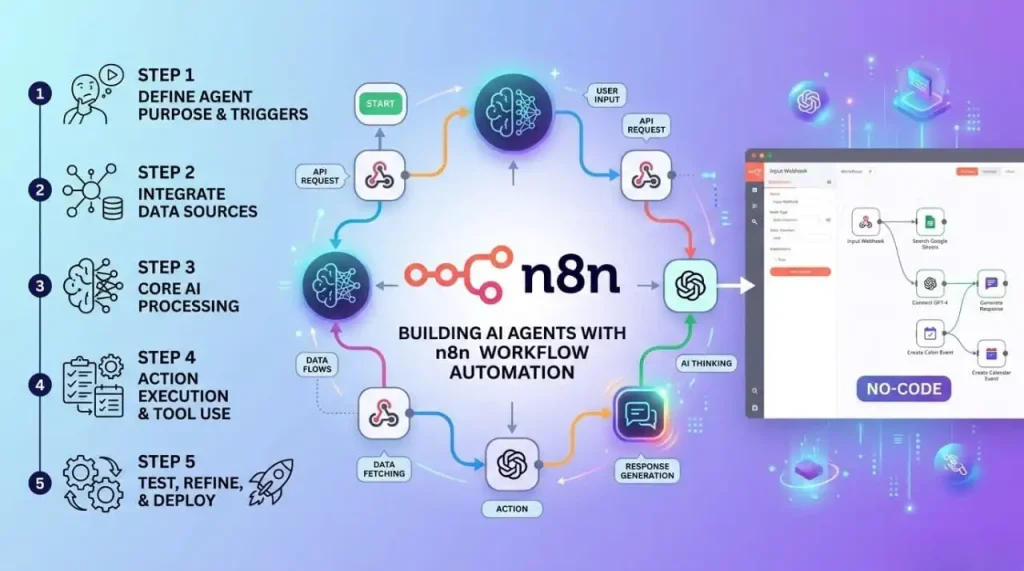
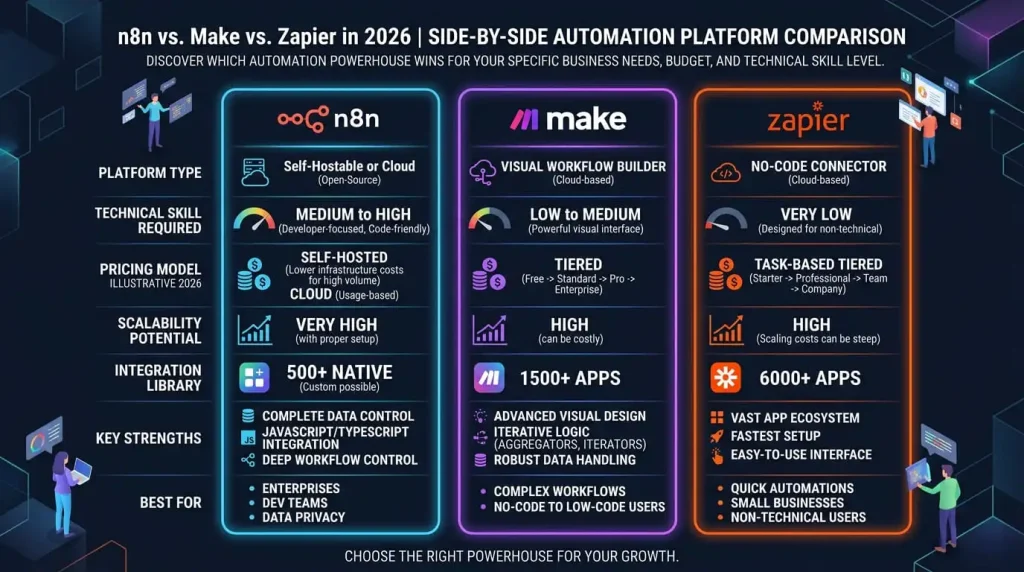
No-code opened the gates. Platforms like Make, n8n, and Zapier’s AI-powered features now let non-technical teams build their own agentic AI workflows. The low-code and digital process automation market is projected to hit $50 billion by 2028, growing at 33% annually. This isn’t enterprise-only territory anymore.
The ROI data is impossible to ignore. Companies that have deployed AI automation report revenue increases between 3% and 15%, plus a 10–20% jump in sales ROI. When those numbers land in a board deck, budgets move fast.
Multi-Agent AI Systems: When AIs Work as a Team
Here’s where things get genuinely fascinating — and where most coverage completely misses the point.
The real power in 2026 isn’t the single AI agent. It’s multi-agent AI systems: networks of specialized agents that coordinate with each other to execute complex end-to-end workflows.
Think of it like building a team instead of hiring one generalist. You wouldn’t ask one person to simultaneously handle sales, legal, content, and finance. You build a team where each person owns their domain — and they communicate.
Same logic applies to agentic AI.
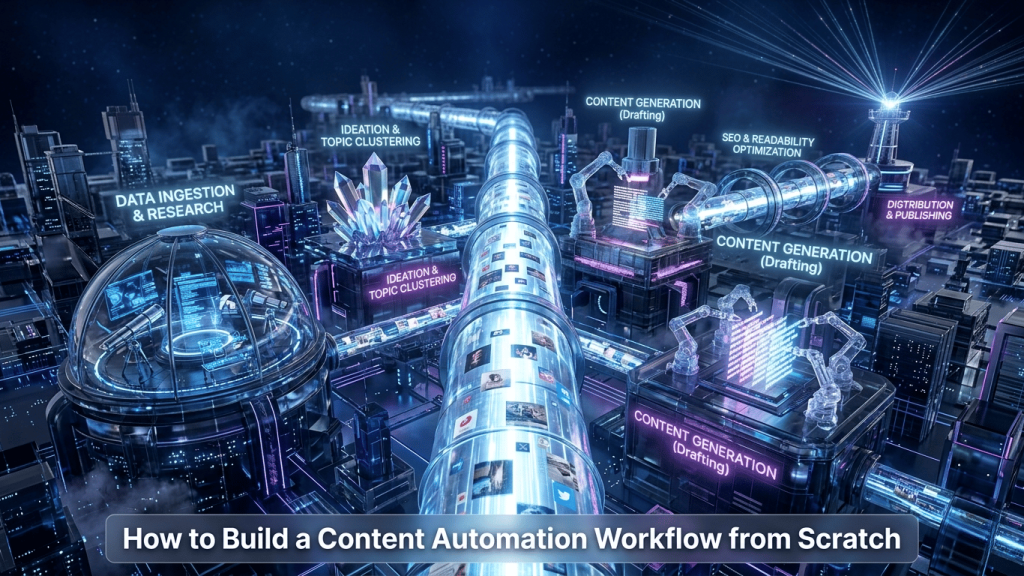
A sales agent qualifies inbound leads. It passes warm prospects to a content agent that generates personalized case studies. A scheduling agent handles the calendar outreach. A reporting agent tracks conversion at every stage and flags bottlenecks. All simultaneously. All in real time.
The platforms winning in 2026 aren’t selling standalone bots — they’re selling orchestration layers with governance, observability, and deep integration into enterprise systems. Gartner predicts that by end of 2026, 80% of simple workflow automations will be embedded features inside tools you already use — not separate products. The standalone automation bot is going the way of paid email hosting.
This also changes the interface entirely. Instead of configuring workflows step by step, you describe outcomes in plain English: “When a new lead comes in, qualify them, enrich their profile, and notify the right sales rep.” The agent interprets intent, builds the workflow, and adapts as systems evolve. Natural language becomes the new abstraction layer — the same leap we saw when search replaced directories, or touch replaced physical buttons.
The 4 Business Sectors Getting Hit First (And Hardest)
Not every industry transforms at the same pace. Here’s where the disruption from agentic AI for business is already clearly visible.
Sales and Marketing are experiencing the deepest shift. The old model — schedule a workflow, trigger a message, hope for the best — is being replaced by systems that continuously optimize themselves. Audience prioritization, content production, channel selection, anomaly detection: all of this is now being handled, adjusted, and improved by agents running in the background. The teams winning aren’t those with the most tools. They’re the ones who’ve built AI automation workflows that function as coordinated decision-making systems.
Finance and Accounting have long been buried in manual, repetitive work. AI combined with robotic process automation (RPA) can now automate up to 80% of transactional finance tasks — payment processing, reconciliations, compliance reporting. Finance teams are being redeployed toward analysis and strategy. The back-office bottleneck is being systematically removed.
HR and Talent face a more nuanced disruption. Agents are taking over entry-level tasks — CV screening, onboarding workflows, policy Q&A. That’s useful. But it’s forcing a critical question: if junior-level work gets automated, how do early-career employees develop expertise? This isn’t theoretical. HR directors and L&D teams are actively working through it right now.
Product and Engineering are accelerating dramatically. Gartner projects that 80% of code will be AI-generated by 2027. Prompt-driven development — describing what you want in plain language and having AI build it — is becoming the default workflow for many teams. The risk? Unverified, insecure code can ship at speed. Governance frameworks aren’t optional here.
The Shadow AI Problem Nobody Wants to Talk About
There’s a blind spot inside every adoption curve — and it’s almost certainly sitting inside your organization right now.
In most companies, AI usage is growing faster than policy. Employees are using personal tools, building unauthorized automations, and sharing sensitive data with unvalidated third-party platforms. This is what’s being called Shadow AI — and in 2026, it graduates from a minor inconvenience to a serious business risk.
The EU AI Act, coming into full effect this year, is creating real compliance exposure. It mandates transparency, auditability, and accountability for high-risk AI systems — regardless of which vendor built them. Companies without structured AI governance are looking at regulatory liability they haven’t planned for.
68% of companies cite data security as their top concern in AI projects. 59% have refused to deploy specific AI solutions because of customer data protection issues. Those numbers reflect a very real tension: the pressure to move fast versus the obligation to move responsibly.
The solution isn’t to ban AI adoption. It’s to formalize it. Map what’s already being used. Establish a clear policy. Deploy approved tools with the right access controls. Organizations that do this work now don’t just reduce risk — they build a lasting competitive advantage, because their agentic AI runs on clean, governed data instead of chaos.
How to Implement AI Agents in Your Business (Without Wasting 6 Months)
The question isn’t whether to adopt agentic AI for business. It’s how to do it without burning resources on projects that never leave the pilot stage.
Before picking tools, check out our guide to the best AI automation tools for 2026 — it cuts through the noise and covers the platforms actually worth your time right now.
Here’s the implementation pattern that works.
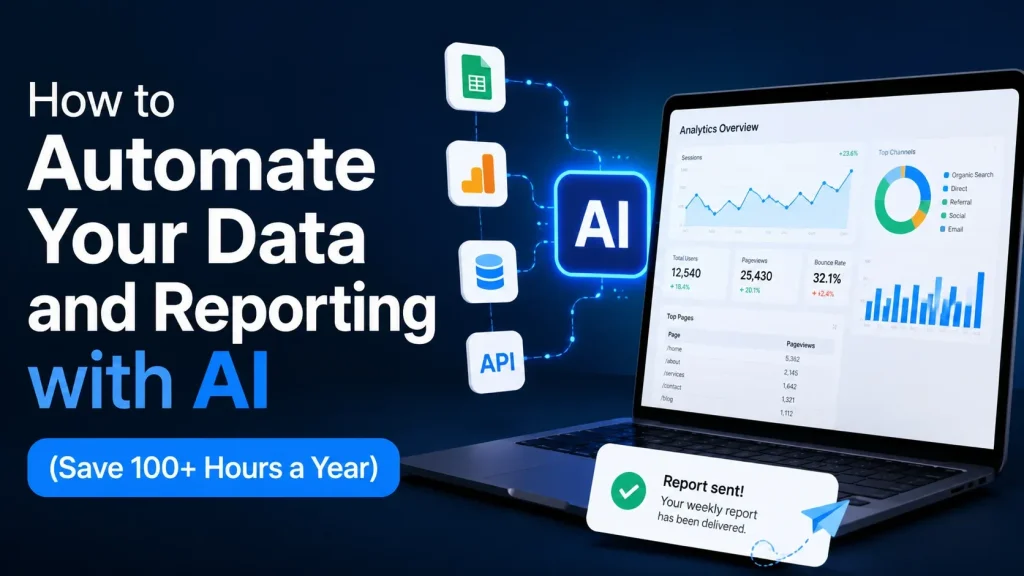
Start with high-volume, low-risk tasks. Don’t begin with your most complex or most critical process. Find something repetitive, well-defined, and measurable — weekly reporting, invoice processing, lead routing — and automate that first. The ROI becomes visible quickly (most businesses see returns within 12 months), which builds internal buy-in for bigger moves.
Map before you automate. The AI projects that fail are the ones that automated broken processes and amplified the dysfunction. Before building anything, document the workflow as it currently exists. Understand the edge cases. Know where humans are adding real judgment versus just moving data around.
Copilots before autonomous agents. Rather than targeting full autonomy immediately, build confidence with AI assistants that augment your team’s work first. They’re easier to deploy, easier to adopt culturally, and they generate the trust that makes more autonomous deployments possible down the road.
Train the humans, not just the tools. The organizations extracting the most value from AI aren’t the ones with the most sophisticated systems — they’re the ones where people know how to work with those systems. How to evaluate outputs critically. How to write good prompts. How to catch failures before they escalate. Once your first agent is live, our guide to AI automation workflows covers the best setups for teams of every size.
The Bottom Line
The era of AI as experiment is over.
2026 is the year agentic AI for business moves from competitive advantage to baseline infrastructure. The gap between companies that have structured this well and those that haven’t is going to become visible very fast.
The companies winning with AI aren’t replacing their people. They’re restructuring what their people focus on. Strategy, judgment, relationships, creativity — these become the core. The repetitive, the procedural, the slow — that gets handed to the agents.
The real question isn’t “Should we adopt agentic AI?”
It’s “What are we going to do with the time and capacity we’re about to get back?”
Answer that first. Then build backward.
Frequently Asked Questions
What is the difference between AI agents and traditional automation? Traditional automation follows fixed, predefined rules — if X happens, do Y. AI agents are goal-driven: you give them an objective, and they autonomously plan and execute the steps needed to reach it, adapting in real time when something changes along the way.
Are AI agents safe for business use in 2026? Yes — when properly governed. The key is implementing clear operational boundaries, audit trails, and human escalation paths for high-stakes decisions. The risk isn’t the agents themselves; it’s deploying them without oversight structures in place.
How much does it cost to implement agentic AI for business? It varies widely. No-code platforms like Make or n8n start at $20–$50/month for basic multi-step workflows. More complex multi-agent systems on enterprise platforms typically run $2K–$10K+ to build and integrate. Most businesses see ROI within 12 months.
Which businesses benefit most from agentic AI right now? Sales and marketing teams, finance departments, and customer support operations see the fastest and clearest returns. Any team running high-volume, repetitive, data-driven tasks is an ideal candidate for an early AI agent deployment.
Want to go deeper? Explore AIWiner’s hands-on guides to building your first AI workflow, the best automation platforms compared for 2026, and weekly updates on what’s actually moving the needle — no hype, no fluff.
Tags: Agentic AI, AI Agents, Automation, Artificial Intelligence 2026, Multi-Agent AI Systems, AI Automation Workflows, No-Code, Digital Transformation