


For years, I treated web hosting like a necessary evil.
I wasn’t trying to build the perfect setup. I just wanted my sites to load, stay online, and stop stealing my time and focus. Instead, I kept running into the same problems over and over:
- Random slowdowns I couldn’t explain.
- Short outages right when I was running promos.
- Support replies that felt copy‑paste and didn’t really solve anything.
- Renewal invoices that were way higher than what I signed up for.
If you’ve ever used “cheap but good enough” hosting, you probably know exactly what I’m talking about.
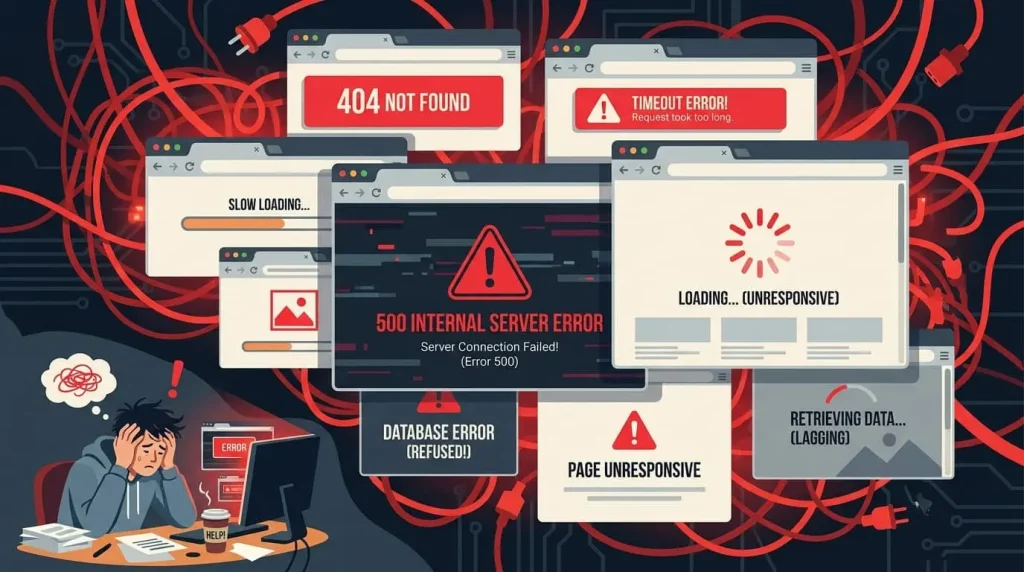
When “it’s just my hosting” becomes a real business problem
At first, I shrugged everything off.
A 10‑second page load here, a small outage there — annoying, but survivable. Then I started to connect the dots:
- Search rankings dropping after repeated slow performance.
- Paid traffic campaigns sending clicks to a sluggish site.
- Clients sending “Is your site down?” screenshots.
- My own habit of avoiding updates because I was scared of breaking things.
The final straw was a weekend promo that did really well on the ad side… but half the people who clicked hit a slow, half‑broken site. I spent more time in support chat than looking at my numbers.
At that point, “it’s just my hosting” wasn’t true anymore — it was costing me attention, conversions, and patience.
If you’re in the same situation, you can check the hosting platform I ended up using with this partner link — it currently includes an extra discount:
The conversation that changed how I think about hosting
I vented to a friend who also builds projects online. I expected the usual “yeah, hosting is annoying” sympathy. Instead, he asked me a simple question:
“Why are you still with a provider that forces you to be the sysadmin?”
He’d gone through the same cycle: chasing the lowest price, stacking “unlimited” everything, and then living with slow speeds, unclear backups, and support that only really helped when nothing serious was wrong.
His take was blunt:
- Saving a bit of money each month is meaningless if your site is slow when it matters most.
- Good infrastructure should be boring and predictable — so you can focus on building content and offers, not fighting servers.
He told me to stop trying to fix a fundamentally bad setup and just move to a provider that had already done the hard work on performance, stability, and backups.
I wasn’t excited about migrating, but I was more tired of firefighting.

What changed after the switch
I’m not going to pretend switching hosts magically turned my business into a rocket. It didn’t. What it did was remove a whole category of problems from my life.
After the move, a few things became noticeably different:
- Page loads stopped being a coin flip. Performance was consistent. I didn’t have that feeling of “I hope the site is fast today” every time I shared a link.
- Downtime stopped being part of the weekly routine. Instead of micro‑outages at random hours, uptime became something I checked occasionally rather than obsessively.
- Backups and security weren’t a mystery anymore. Basic protections, automatic backups, and SSL were handled in a way that didn’t require me to dig through ten different menus.
- Support became a last resort, not a crutch. The number of times I needed to open a ticket dropped sharply, because fewer things were going wrong in the first place.
The biggest change was mental: my hosting stopped living in my head. I could finally focus on content, funnels, and product work instead of wondering whether my sites were about to throw another surprise.
Want to stop babysitting your hosting too?
If you’re dealing with slow loading, random downtime, and support tickets that go nowhere, switching providers might fix more than you think.
The coupon rabbit hole (and why most “discounts” don’t matter)
Once I decided to move, I did what everyone does: I started searching for deals.
And just like you’d expect, the internet is full of hosting coupon codes and “exclusive discounts” that all look impressive at first glance. But when you look closer, most of them are:
- The same 5–10% that everyone else has.
- Tied to specific plans or billing cycles.
- Already baked into the public promo price anyway.
In other words, you can waste a lot of time chasing codes that don’t really move the needle.
The rare discount that finally made the decision easy
After walking me through his experience, my friend sent me a link and said:
“If you’re going to move, at least don’t pay full price. This one should give you around 20% off. It’s not a forever thing, so use it while it works.”
At first, I assumed it was just another “fancy” 5% code. But it wasn’t. It was an actual extra discount — the kind of thing you don’t usually see once a provider is already well‑known and doesn’t need to give away huge cuts all the time.
That did two things for me:
- It made the switch easier to justify financially — I was already paying in money and stress to keep my old setup.
- It gave me a concrete “start now” moment instead of another month of “I’ll migrate later.”
So I used it, migrated my projects, and then — most importantly — I stopped thinking about hosting every day. That alone was worth more than the discount.thinking about hosting every day. That alone was worth more than the discount.

If you’re in the same situation, here’s the path I used
I promised I wouldn’t turn this into a “you must buy this” pitch, so I’ll keep it simple.
The platform I use now is the first one in a long time that I feel comfortable recommending to people who actually run businesses online, not just hobby sites. It’s not magic, but it removed an entire category of headaches from my week.
If you want to try something similar, you can absolutely go hunt coupons on your own. You’ll mostly find the usual 5–10% codes that every blog and coupon site shares.
Or, you can use the same link my friend shared with me — the one that, at the time I’m writing this, gives you a noticeably better discount than the standard promos.
The same link my friend gave me
You can spend hours hunting for random small coupons, or you can use the same link my friend passed to me — the one that, when it’s active, gives you around 20% off instead of the usual small codes.
If it’s live, lock it in and move your projects once — so you can stop thinking about hosting and get back to building your business.