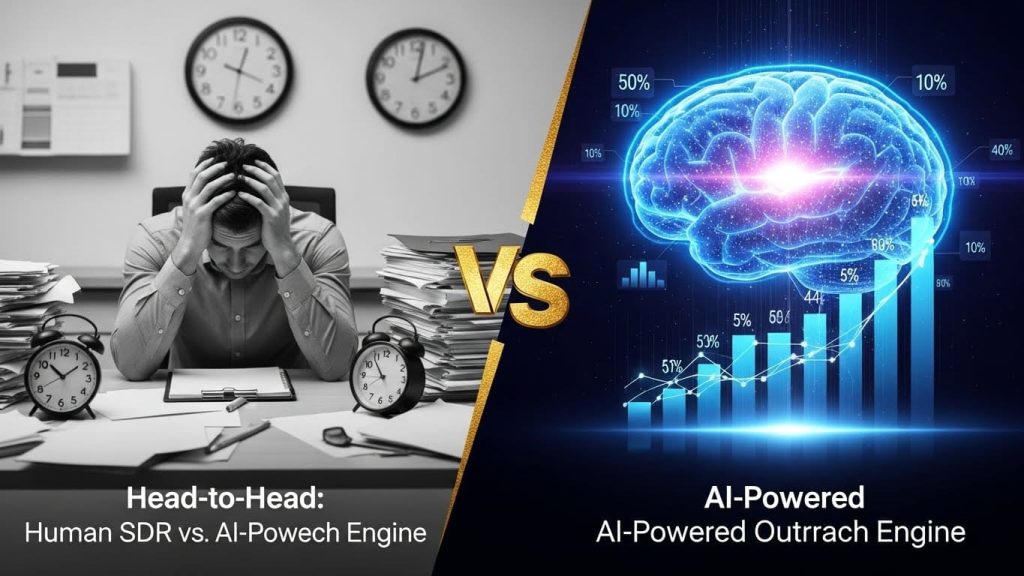


The business world is experiencing a seismic shift, one where the old metrics of efficiency are being rewritten in real-time. This transformation is driven by Artificial Intelligence (AI), which has evolved from a niche technology to the ultimate productivity partner. For entrepreneurs and businesses targeting scale in the US market, understanding this change—and leveraging the new tools available—is paramount to success.
This article serves as the foundational guide to the AI Productivity Transformation, outlining how AI fundamentally changes the way work gets done, from managing your daily inbox to formulating long-term strategy.
From Automation to Augmentation: The New Definition of Productivity
Historically, productivity was measured by output per hour. Automation focused on eliminating rote tasks. Today, AI goes beyond mere automation; it delivers augmentation.
Augmentation means equipping the human workforce with intelligent copilots that enhance creativity, judgment, and speed. AI tools don’t just process tasks faster; they perform tasks that were previously impossible for a human to manage alone, such as analyzing millions of data points or generating complex content on demand.
The result is a leap in efficiency where the focus shifts from doing more work to doing higher-quality work in less time.
Three Pillars of AI-Driven Efficiency
The impact of AI on productivity can be categorized into three major areas: task streamlining, specialized augmentation, and knowledge work acceleration.
1. The Power of Generative AI for Knowledge Work
Generative AI, exemplified by models like ChatGPT, has fundamentally accelerated knowledge work. Instead of starting from a blank page, professionals now start with a high-quality draft.
- Content Creation: Marketing, sales, and training materials can be drafted, summarized, or translated in seconds.
- Drafting & Communication: The ability to instantly generate meeting summaries, initial contracts, or technical documentation dramatically reduces the time spent on fundamental text-based tasks. (This connects directly to the time-saving strategies explored in Time Savings with ChatGPT).
2. Strategic Automation in Core Business Functions
AI moves past simple Robotic Process Automation (RPA) to handle complex, strategic, and often tedious tasks within core business functions.
- Email Management: AI tools automatically categorize, prioritize, and even draft responses to incoming emails, ensuring that only the most critical communications require human attention. This is essential for maintaining focus and inbox zero. (This use case is explored further in AI for Email Automation).
- Data Analysis and Reporting: Instead of manually compiling data sets, AI instantly spots trends, anomalies, and competitive insights, generating detailed reports that inform executive decision-making in minutes, not days.
3. Specialized Tools for the Entrepreneur
For the solo founder or small business owner, AI acts as an entire outsourced department—a virtual team available 24/7.
- Financial Forecasting: AI predicts cash flow and demand trends with higher accuracy than spreadsheets alone.
- Design & Branding: Tools can generate logos, social media assets, and website mockups, democratizing professional design capabilities.
- Legal & Compliance: AI quickly reviews contracts for key clauses and potential risks, offering a crucial layer of security.
The ecosystem of specialized AI tools available today allows small businesses to compete on the same playing field as large enterprises. (For specific recommendations, see Best AI Tools for Entrepreneurs).
The Roadmap to AI-Powered Productivity
To successfully navigate the AI Productivity Transformation, entrepreneurs must adopt a strategic mindset:
- Audit Your Time: Identify the three most time-consuming, repetitive tasks that don’t require human creativity or emotional intelligence. These are your prime candidates for AI delegation.
- Pilot Specialized Tools: Don’t try to automate everything at once. Start by piloting a dedicated tool—like an email agent or a content summarizer—to measure tangible time savings.
- Invest in AI Literacy: The future of work is collaboration between humans and AI. Train your team not just on how to use the tools, but on how to prompt them effectively to achieve maximum leverage.
The AI Productivity Revolution is here, not to replace the human element, but to amplify it. By embracing these intelligent systems, businesses can achieve unprecedented levels of efficiency, freeing up human talent to focus on innovation, creativity, and strategic growth.