
Artificial intelligence is rapidly moving beyond simple chatbots and reactive assistants. A new generation of systems—autonomous AI agents—is emerging, designed not just to respond to prompts but to plan, reason, and execute complex tasks independently.
One of the most notable names in this space is Manus AI.
Unlike traditional AI tools that wait for instructions step by step, Manus AI is built to take ownership of a goal, break it down into actionable steps, and carry out those steps with minimal human intervention.
To understand why Manus AI matters—and how it fits into the broader evolution of AI—it’s essential to see it in the context of the full ecosystem described in Manus AI and the New Manus Academy: The Complete Guide to Autonomous AI Agents and AI Education (2025).
This article dives deep into:
- what Manus AI actually is,
- how autonomous AI agents work,
- what makes Manus different,
- and why agent-based AI represents a fundamental shift in how work gets done.
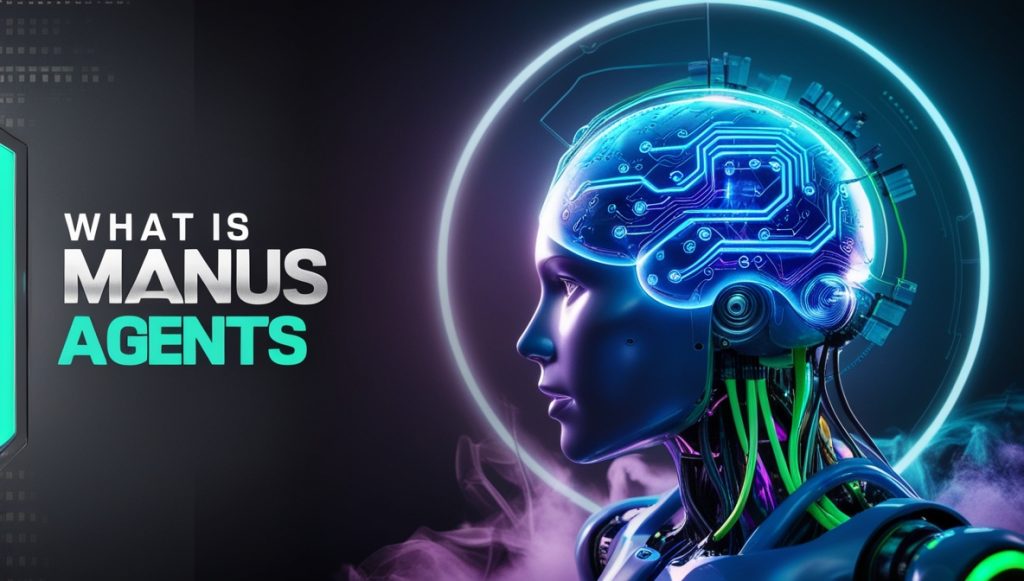
What Is Manus AI?
Manus AI is an autonomous AI agent system designed to execute real-world tasks rather than simply generate responses.
At a high level, Manus AI can:
- understand a high-level objective,
- decompose it into smaller tasks,
- decide how to approach each task,
- execute actions across tools or environments,
- evaluate progress and adjust when needed.
This makes Manus AI agentic, not conversational.
In simple terms:
You don’t tell Manus how to do every step — you tell it what outcome you want.
From Chatbots to Autonomous AI Agents
Traditional AI Tools: Reactive by Design
Most AI tools today (including many chat-based systems) are reactive:
- the user asks a question,
- the AI responds,
- the user takes action.
Even when powerful, these tools still rely heavily on constant human direction.
Autonomous AI Agents: Goal-Driven Systems
Autonomous AI agents like Manus operate differently.
They are designed to:
- receive a goal, not a question,
- reason about the steps required,
- execute those steps autonomously,
- monitor progress and correct errors.
This represents a shift from prompting AI to managing AI execution.
How Manus AI Actually Works (Conceptually)
While internal implementations may evolve, autonomous agents like Manus typically rely on four core components.
1. Goal Understanding
Manus AI starts by interpreting the intent behind a task.
Example:
“Research competitors and summarize market positioning.”
Instead of answering with advice, Manus understands this as a multi-step objective.
2. Task Decomposition
Once the goal is understood, Manus AI breaks it down into smaller actions:
- identify competitors,
- collect data,
- analyze positioning,
- synthesize insights.
This planning step is critical—and absent from traditional chat-based AI.
3. Execution and Tool Use
Manus AI can then:
- execute research steps,
- process information,
- interact with tools or systems (depending on setup),
- generate structured outputs.
This is where Manus moves from thinking to doing.
4. Evaluation and Iteration
Autonomous agents don’t just execute blindly.
Manus AI can:
- check progress,
- detect inconsistencies,
- refine outputs,
- adjust its approach if results are incomplete.
This feedback loop is what enables autonomy.
What Makes Manus AI Different from Other AI Tools?
Execution Over Explanation
Most AI tools explain how to do something.
Manus AI focuses on doing the work itself.
This makes it especially valuable for:
- repetitive workflows,
- research-heavy tasks,
- operational processes.
Agentic Thinking, Not Prompt Chaining
Instead of chaining prompts manually, Manus AI:
- reasons across steps internally,
- maintains task continuity,
- reduces cognitive load on the user.
This is a major productivity shift.
Designed for Real Workflows
Manus AI is positioned for real-world execution, not demos.
Use cases include:
- research automation,
- content operations,
- planning and analysis,
- multi-step problem solving.
Why Autonomous AI Agents Are a Big Deal
Autonomous agents represent the next phase of AI adoption.
They enable:
- scalability without constant supervision,
- delegation of cognitive work,
- new operational models for teams and creators.
This is why systems like Manus AI are increasingly discussed alongside broader AI agent trends.
Manus AI and the Rise of Agent-Based Work
Agent-based AI changes how humans interact with machines:
- humans define goals,
- AI executes workflows,
- humans supervise outcomes.
This model mirrors how teams already work—making adoption more intuitive.
It also explains why education around agents is becoming critical, which is where Manus Academy comes in (covered in depth in the Manus ecosystem guide).
Practical Examples of What Manus AI Can Do
Depending on configuration, Manus AI can assist with:
- automated research and synthesis,
- multi-step content preparation,
- workflow planning,
- decision support tasks.
The key value is end-to-end execution, not isolated answers.
Limitations and Responsible Use
Autonomy introduces new challenges:
- AI still requires supervision,
- goals must be clearly defined,
- ethical and operational boundaries matter.
Manus AI is powerful—but like all agentic systems, it works best with human oversight.
This balance between autonomy and control is a central theme in modern AI education.
How This Article Fits into the Manus Topic Cluster
This article focuses specifically on what Manus AI is and how autonomous agents work.
It complements:
- the pillar overview of Manus AI + Manus Academy,
- deeper comparisons with traditional AI tools,
- practical guides on using Manus for real workflows.
Together, these pieces establish topical authority around AI agents.
Conclusion
Manus AI represents a clear step forward in the evolution of artificial intelligence.
By shifting from reactive responses to autonomous execution, it changes:
- how work is delegated,
- how productivity scales,
- how humans collaborate with machines.
Understanding how Manus AI works is essential for anyone interested in:
- AI agents,
- automation,
- the future of work.