

3 pro complete guide — Pro complete guide 2026 is one of the most important topics in AI and automation in 2026. Meta Description: How to design and build a multi-step AI agent using the Gemini 3 Pro API in practical, beginner-friendly steps.
Gemini 3 Pro makes it possible to move from simple one-shot prompts to full AI agents that execute multiple tasks in a sequence. Instead of answering just a single question, a multi-step agent can follow a workflow: gather information, analyze it, transform it, and then produce a final, high-quality output ready to use in your projects or business.
If you already use ChatGPT and want to move to the next level, understanding how to build multi-step agents with Gemini 3 Pro is a natural and important step in your applied AI journey.
What Is a Multi-Step AI Agent?
A multi-step AI agent is an intelligent system that can receive a high-level goal, break it down into smaller tasks, execute these tasks in order while keeping track of state between each step, and improve the results through feedback loops or retries when something goes wrong.
The difference from a single prompt is that the agent has a workflow, not just a one-shot response.
Core Components of a Multi-Step Agent
To build a successful agent with Gemini 3 Pro, you need four core pieces. Tasks represent each step as a clear task. State is a place to store intermediate results. Orchestration is the logic that decides which step runs now and what data is passed from one step to the next. Error Handling allows the agent to retry on failures, stop gracefully when something unexpected happens, and log what happened for debugging.
Getting Started with Gemini 3 Pro
Before building your workflow, set up the environment by installing the Gemini 3 Pro Python SDK, storing your API key in environment variables, and writing a tiny test script that sends a single prompt and prints the response.
Designing a Simple Multi-Step Workflow
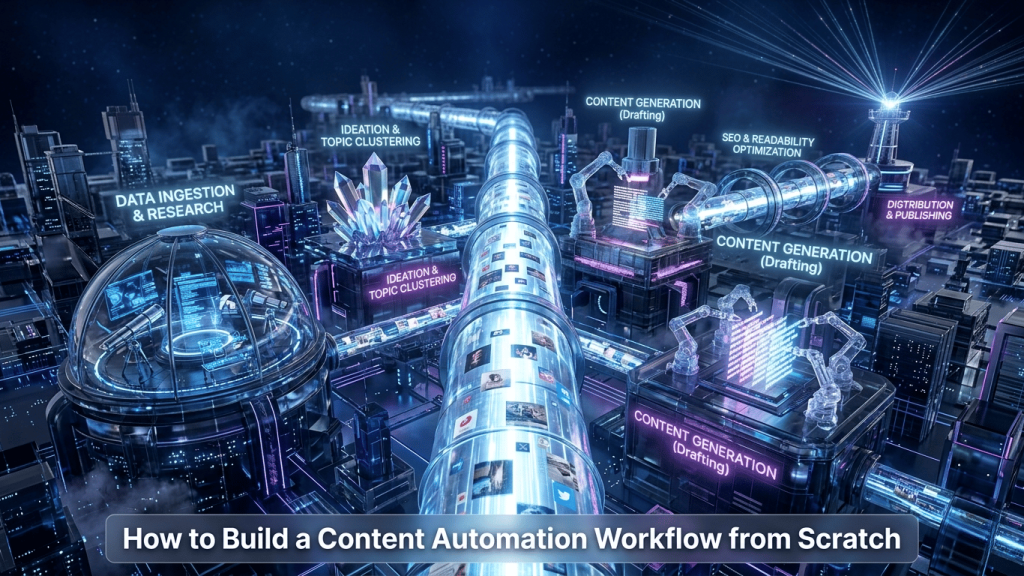
Example: An agent that builds a complete report on a topic. Step 1 is Research where the agent generates key bullet points about the topic. Step 2 is Structuring where points are transformed into a structured outline. Step 3 is Draft Writing where the outline is used to write the first draft. Step 4 is Refinement where the draft is improved for clarity and SEO. Step 5 is Final Output where the finished text is ready to use.
Advanced Patterns You Can Use
Once you’re comfortable with the basics, you can design more advanced patterns. Parallel Tasks let you run several steps at the same time. Conditional Branching lets you insert extra steps if research looks incomplete. Feedback Loops let you ask the model to improve the text automatically.
Real-World Use Cases
With this style of agents you can build systems such as automatic Pillar and Satellite content builders, advanced customer support agents, and sales proposal assistants.
Best Practices for Building Gemini 3 Pro Agents
Start small rather than beginning with a huge workflow. Define each step clearly by specifying input, output, and success conditions. Log everything including prompts, responses, and errors. Test edge cases and make the agent configurable.
How This Fits Your Pillar Content
This Satellite should be linked from the main Fundamentals of Artificial Intelligence guide as the next level article once readers understand basic AI concepts.
Conclusion
Multi-step AI agents represent the bridge between using standalone tools and building fully automated systems. By mastering these concepts, you open up possibilities for serious AI projects. Want to explore the tools themselves? Check out our Gemini 3 Pro overview guide next.
Continue learning
← Back to Fundamentals of Artificial Intelligence
Next: Gemini 3 Pro Overview
Gemini 3 Pro: The Multi-Modal Model Reinventing Automation
Welcome back to AIWiner! Our mission has always been to decode the rapid evolution of AI, from the revolutionary language models (LLMs) to enterprise automation solutions. Today, we are facing a major paradigm shift: the arrival of Gemini, Google’s most powerful and ambitious artificial intelligence model ever designed. This is not a mere update; it’s a reinvention of the very foundation of AI. For any leader or automation specialist seeking performance, the time for observation is over: mastering Gemini’s capabilities is the only way to maintain your competitive edge. In this deep dive, we will thoroughly explore Gemini’s “multi-modal” architecture, its role as the engine for next-gen automation, and the decisive impact it will have on the future of work.
I. Beyond Text: Understanding Gemini’s Multi-Modality
The core innovation of Gemini is its native multi-modal design. Unlike previous models that were trained primarily on text and later adapted to handle other data types, Gemini was built from the ground up to simultaneously understand, operate across, and combine information from text, images, audio, video, and code.
- The Single-Model Advantage: It’s not a collection of separate AIs; it’s one cohesive model. This allows for seamless transitions and nuanced understanding when processing complex, real-world data (e.g., analyzing a video of an assembly line and generating a code snippet to automate a step).
- Visual-Linguistic Fusion: Discuss the ability to interpret complex charts, graphs, and handwritten notes within a document or image, an essential feature for enterprise data analysis.
II. Architecting the Future: How Gemini Elevates Automation
For the AIWiner audience, the real value lies in its application to automation. Gemini’s advanced capabilities directly translate into groundbreaking use cases.
A. Advanced Reasoning and Planning :
Its ability to process vast amounts of disparate information simultaneously gives it superior reasoning and problem-solving skills, crucial for complex workflow automation (e.g., supply chain optimization, drug discovery).
B. Code Generation and Debugging :
Highlight its performance in generating high-quality code in multiple languages. It can analyze screenshots of error messages and provide fixes or new functional code instantly, significantly accelerating the development lifecycle.
C. AI Agent Creation :
Gemini’s integration with tools and its ability to understand context allows for the creation of more sophisticated, goal-oriented AI Agents that can autonomously complete multi-step tasks (e.g., booking a trip, managing a customer service queue end-to-end).
III. The American Enterprise Advantage: Sector-Specific Impact
Detail how Gemini will disrupt key U.S. sectors:
- Finance & Insurance: Automated fraud detection by cross-referencing transaction text with images/videos from surveillance.
- Healthcare: Faster diagnostic assistance by analyzing medical images (X-rays, MRIs) alongside patient notes and research papers.
- Manufacturing: Real-time quality control using video analysis of production lines, immediately alerting for deviations and even suggesting corrective code for robotic arms.
IV. Looking Ahead: The Roadmap for AIWiner’s Readers
Conclude by positioning Gemini as the foundation for the next decade of automation. Urge readers to begin experimenting with its APIs for their specific enterprise needs.
Gemini 3 Pro Overview: Key Features and Capabilities
Meta Description: An accessible overview of Gemini 3 Pro, its main features, and when to use it in AI projects.
Gemini 3 Pro is a modern AI platform designed to make building intelligent applications faster and easier, especially for developers and founders who want real business results without managing low-level machine learning models. Instead of training and hosting your own models, you get a powerful, production-ready API you can plug directly into web, mobile, or automation workflows.
This article gives you a clear overview of what Gemini 3 Pro offers, when to choose it, and how it compares to tools like the standard OpenAI API or simple ChatGPT usage.
What Is Gemini 3 Pro?
You can think of Gemini 3 Pro as an advanced layer on top of AI models that combines strong language understanding and generation, multi-modal support for text and other data types, built-in tools for multi-step agents, and smooth integration with popular Python frameworks and backend stacks.
Key Features of Gemini 3 Pro
Powerful but Simple API
The API is designed to be easy to use for beginners yet flexible enough for large-scale systems. With a few lines of code, you can send a prompt, control response length and tone, and build multi-turn and multi-step workflows.
Multi-Modal Capabilities
Gemini 3 Pro can analyze or describe images and diagrams, combine visual information with textual instructions, and generate text based on screenshots or UI mockups. This is useful for e-commerce product descriptions and content creators turning visual drafts into written copy.
Scalability and Reliability
The platform handles thousands of concurrent requests with low latency and cloud infrastructure that automatically scales with load.
Integration with Popular Frameworks
Gemini 3 Pro works smoothly with TensorFlow and PyTorch, FastAPI, Django, and Flask, Docker and Kubernetes, and monitoring tools like Prometheus.
Typical Use Cases
Content and Knowledge Workflows include generating articles and reports and building complete pillar and satellite structures. Customer Support includes creating advanced chatbots and processing tickets in multiple steps. Data and Document Intelligence includes summarizing PDFs and building semantic search. Multi-Step AI Agents include data analysis pipelines and automated proposal generators.
When to Use Gemini 3 Pro vs ChatGPT Only
Use ChatGPT alone when you need quick help, work manually without automation, or are drafting simple content. Use Gemini 3 Pro when you want to integrate AI into an app or website, need multi-step workflows, expect many users, or must connect with databases and other APIs.
Best Practices for Working with Gemini 3 Pro
Design prompts carefully, separate logic from prompts, monitor usage and cost, implement a safety layer, and test with real data.
How to Link This Satellite in Your Cluster
At the end of this article, add a “Related reading” block with links to your main guides.
Conclusion
Gemini 3 Pro bridges the gap between using simple AI tools and building sophisticated, scalable systems. Understanding when and how to use it positions you to solve real business problems. Ready to dive into machine learning fundamentals? Explore our Machine Learning Essentials guide next.
Continue learning
← Back to Fundamentals of Artificial Intelligence
Next: Machine Learning Essentials
Guide: Building Your First Multi-Step AI Agent with Gemini 3 Pro
At AIWiner, we don’t just talk about the future of AI; we show you how to build it. The release of Gemini 3 Pro (preview) brings with it powerful, native agentic capabilities, making it easier than ever to create robust, multi-step automation workflows. This guide is your blueprint. We will walk through the architecture required to leverage Gemini 3 Pro’s planning and tool-use features to build an AI agent that can handle complex, sequential tasks in an enterprise setting.
🛠️ I. Agent Architecture: The Gemini 3 Pro Loop
Building a truly autonomous agent requires more than a simple API call. The new capabilities of Gemini 3 Pro simplify the “brain” of the agent, but the surrounding architecture is key.
- The Three Core Components:
- The Goal Setter (Input): Defining the complex, non-linear task (e.g., “Onboard a new vendor by creating their profile, sending initial paperwork, and notifying the finance team”).
- The Gemini 3 Pro Planner (Core): This is where the model shines. It interprets the goal, breaks it down into sequential sub-tasks, and determines which external Tools (APIs) are needed for each step.
- The Executor (Output/Action): A wrapper function that takes the model’s planned action (e.g.,
Tool: create_vendor_profile(name="...", docs="...")) and executes it against your internal systems (CRM, ERP, etc.).
🔗 II. Defining and Integrating Custom Tools
Gemini 3 Pro’s enhanced reasoning is only as good as the tools you give it. Your agent’s success depends on clearly defining the functions it can call.
- API Schema Definition: You must present your internal APIs (for sending emails, updating databases, fetching reports) to the Gemini 3 Pro model in a structured format (usually JSON schema). This allows the model to “reason” about which function is most appropriate for the current sub-task.
- Example Tool:
Tool Name:
onboard_vendorDescription: Creates a new vendor entry in the Finance ERP system. Parameters:vendor_name: string,tax_id: string
The agent’s intelligence now allows it to choose and format the correct inputs for this tool based on its current context.
💡 III. Real-World Use Case: Automated Due Diligence
Consider a task critical to compliance: automated due diligence.
- The Goal: “Verify all background documentation and financial statements for Vendor X and flag any discrepancies.”
- Gemini’s Steps:
- Step 1: Use
file_reader_toolto analyze the text and figures in the uploaded PDF financial statements (Multi-Modal input). - Step 2: Use
search_apitool to cross-reference the vendor’s name against public sanction lists. - Step 3: Use Internal Reasoning to compare the data points.
- Step 4: Use
notification_toolto send an alert to the legal team if a discrepancy is found.
- Step 1: Use
This demonstrates the powerful combination of Multi-Modal understanding, Tool Use, and Agentic Planning—all key strengths of Gemini 3 Pro.
🚀 IV. Elevate Your Enterprise Automation
The shift to Gemini 3 Pro’s agentic capabilities is not just a technical upgrade; it’s a strategic move to unlock true end-to-end automation. Start small, define clear tools, and let the model handle the complex orchestration.
To understand the core multi-modal technology that powers the reasoning capabilities of Gemini 3 Pro, make sure to read our definitive guide: Gemini 3 Pro: The Multi-Modal Model Reinventing Automation
Gemini 3 Pro: Full Capabilities, Pricing and Use Cases
Gemini 3 Pro (Preview): New Agent Capabilities and Coding Power Redefine Automation ROI
The AI race just accelerated. Google has unveiled the first model of the Gemini 3 series, the Gemini 3 Pro (preview), promising a step-change in multi-modal understanding and reasoning. For AIWiner readers focused on enterprise automation, the key takeaways are clear: this release is heavily focused on agent capabilities and enhanced coding performance, meaning higher Return on Investment (ROI) for your automation projects. Let’s dive into the specifics of these powerful new behaviors.
🧠 I. The Rise of the True AI Agent
The most significant shift in Gemini 3 Pro lies in its agentic behavior. Previous models required extensive prompting and orchestration; this new version shows superior ability to plan and execute complex, multi-step tasks autonomously.
- Goal-Oriented Reasoning: Gemini 3 Pro is designed to move beyond simple question-answering. It can analyze a high-level goal (e.g., “Find the optimal flight/hotel package for a business trip next month, considering price and flight duration restrictions”) and autonomously break it down into the necessary steps:
- Search for flight data.
- Search for hotel pricing.
- Compare and synthesize based on specified constraints.
- Present the final, reasoned solution.
- Enhanced Tool Use: This agentic intelligence is powered by improved external tool integration, allowing the model to more effectively interact with APIs, databases, and software applications—the foundation of all sophisticated automation.
- 💻 II. Coding Performance: Precision and Speed (H2)
Building on the strong foundation of its predecessors, Gemini 3 Pro introduces significant improvements in code generation, debugging, and understanding, which directly impacts the speed and cost of developing automation scripts.
Advanced Code Reasoning: The preview model shows better performance in generating code that is logically sound and syntactically correct even for specialized, proprietary codebases. This reduces the need for extensive human debugging.
Code-to-Code Translation: An indispensable tool for enterprises managing legacy systems, Gemini 3 Pro excels at translating code between languages (e.g., migrating a business logic script from an older framework to Python) with higher fidelity and less manual cleanup.💡 III. New Behaviors: What Makes 3 Pro Different (H2)
Beyond the raw intelligence uplift, the “new behaviors” of Gemini 3 Pro signal a more refined, context-aware, and safer model for business deployment:
Improved Context Retention: The model exhibits greater ability to hold and utilize conversation history and specific instructions over extended, multi-turn interactions. This is critical for long-running, stateful automation workflows (like customer support agents).
Safety and Alignment: For American enterprises, safety is paramount. The preview is likely to introduce stricter alignment on sensitive topics and better adherence to specific brand safety guidelines, making it more reliable for public-facing or regulated applications.⏭️ IV. Next Steps for AIWiner Readers (H2)
The Gemini 3 Pro preview is a strong signal that AI agents are ready to move from concept to scalable enterprise solution. Automation engineers must focus now on integration design and workflow architecture to leverage these powerful new capabilities.
For a comprehensive breakdown of the core multi-modal technology and the foundation that Gemini 3 Pro builds upon, be sure to read our Article on the technology: Gemini 3 Pro: The Multi-Modal Model Reinventing Automation .