
Rate limits, security gaps, and cost scaling force businesses away from ChatGPT. Discover why 8,000+ agencies switched to alternatives this year.
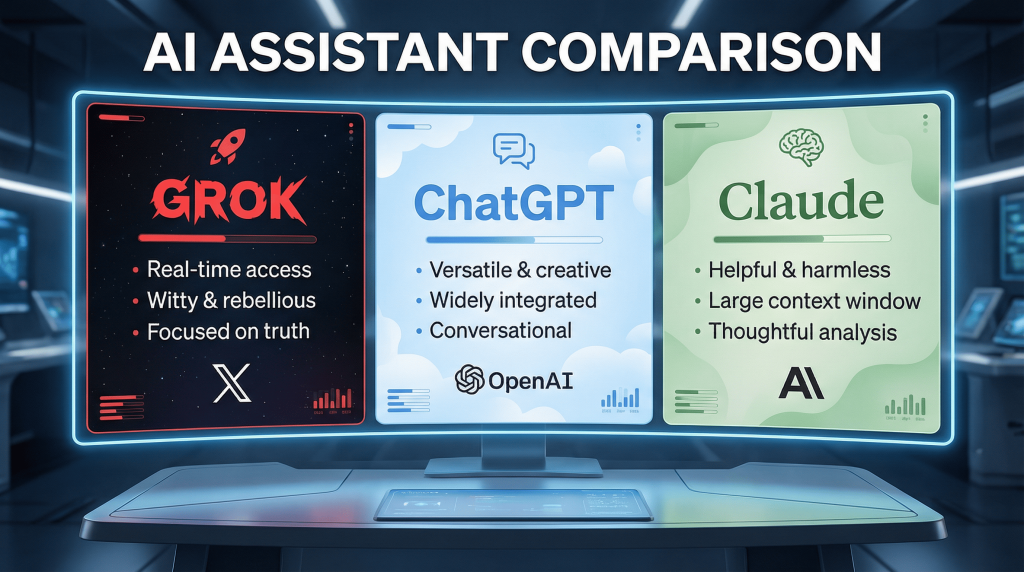
ChatGPT worked great at first. Then your team hit a wall. Peak hour throttling destroys deadlines. Security teams flag data concerns. Costs spiral with usage. You’re stuck between a tool that doesn’t scale and the pressure to deliver consistent output. This isn’t about ChatGPT’s capabilities. It’s about its limits when real business depends on it. Most teams don’t realize what’s driving their frustration. Understanding these pain points helps you find what actually works. Our guide on best ChatGPT alternatives explores solutions teams switched to this year.
ChatGPT launched into a vacuum. Businesses desperate for AI writing jumped on it immediately. The first month felt magical. Output quality seemed passable. Costs looked manageable. Then scaling hit reality hard.
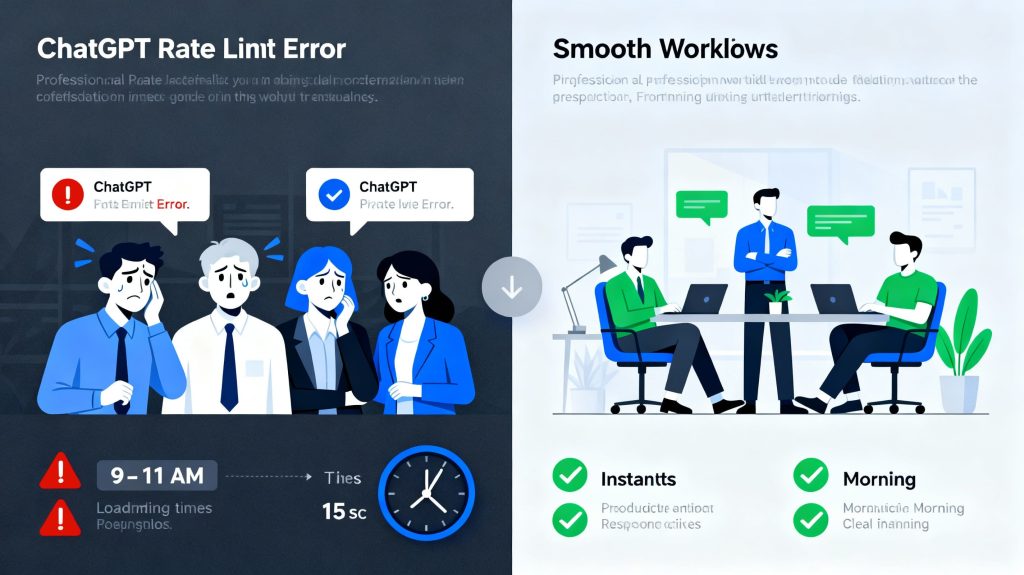
Peak hour throttling kills first. Your team sits down at nine AM. Three hundred emails overnight. Social calendar needs filling. Blog post outline due before lunch. You type a prompt into ChatGPT. Fifteen seconds. Then twenty. Then thirty seconds of waiting. One paragraph takes longer to generate than to write manually. Your whole morning slows down. Multiply that across twenty writers and you’ve lost five hours of productivity before lunch.
This isn’t occasional. This is daily. Nine to eleven AM every single weekday becomes unproductive waiting. Clients notice missed deadlines. Teams get frustrated. Productivity drops below pre-automation baseline. You’re spending more time managing ChatGPT’s limitations than using the tool productively.
Security concerns escalate alongside throttling. Your compliance officer asks about data handling. Shared training data exposure means your client’s content feeds ChatGPT’s future models. You can’t guarantee data isolation. No SOC 2 documentation exists. GDPR alignment is unclear. Agencies serving EU clients face audit risk. Financial services firms can’t justify using consumer tools. Healthcare providers get rejected outright. Your addressable market shrinks because security documentation doesn’t exist.
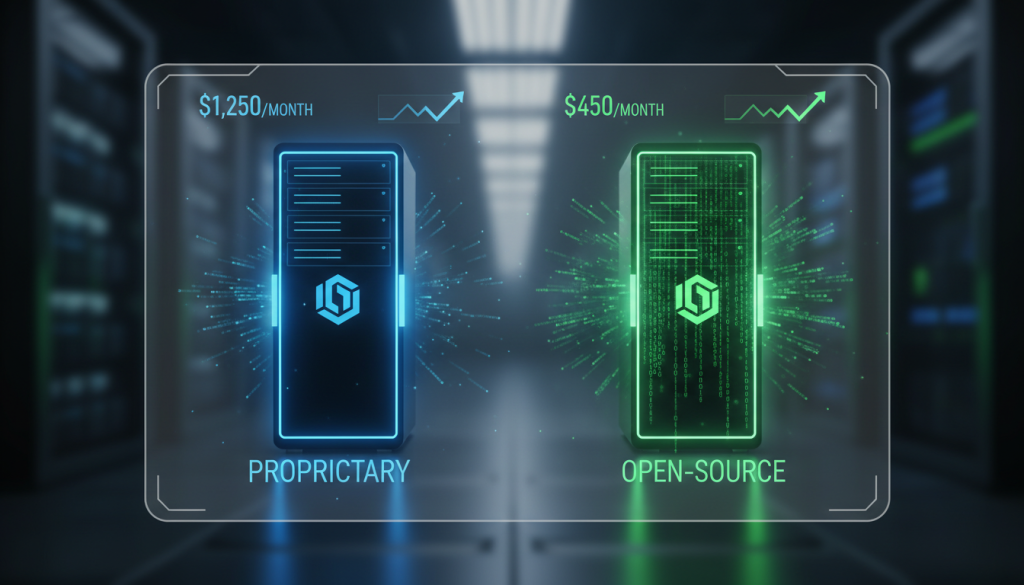
Costs spiral unpredictably. Twenty dollar monthly subscription seemed cheap. Then your team doubled. Twenty-five writers need accounts. That’s five hundred dollars monthly. Seems okay. Then content volume doubles. Twenty-five writers generating double output means higher token usage. Usage-based pricing kicks in. Suddenly you’re spending two thousand dollars monthly for the same twenty-five writers. Finance teams stop approving because the model doesn’t scale with business growth.
Context window limitations create real problems. Your competitive analysis requires fifty sources. ChatGPT caps at 128K tokens. That’s roughly a hundred pages of source material. You need double that. You’re forced splitting research across multiple sessions. Coherence drops. You lose analytical insights that come from seeing the full picture at once. Whitepapers that should take one workflow now require five separate generations.
Team collaboration breaks down fast. Shared chat histories create organizational chaos. Nobody knows who refined which prompt. Version control doesn’t exist. Permission tiers are missing. One junior writer experiments with a controversial prompt. Suddenly the brand voice shifts across the entire team’s output. Output consistency drops because there’s no structural way to enforce it. You’re managing chat history spreadsheets instead of having a real team collaboration platform.
Integration nightmares compound daily. Your CRM doesn’t connect to ChatGPT. Email to spreadsheet automation requires brittle Zapier workflows. Those workflows fail twelve percent of the time. You’re building workarounds for a tool that wasn’t designed for business workflow integration. Every integration takes custom scripting. Every update breaks existing workflows. You’re spending developer time maintaining API connections that should work natively.
Output quality degrades under load. Creative tangents appear in eighteen percent of business copy. Fact-checking required on twenty-two percent of reports. Editorial teams spend forty percent of their time fixing hallucinations. The tool works fine on simple tasks. Production work tells a different story. Your editorial team becomes proofreaders instead of strategists.
Scalability testing reveals hard limits. Fifty concurrent users trigger artificial queues. Your agency planning Black Friday campaign hits capacity walls mid-project. Predictability disappears exactly when reliability matters most. You can’t scale the team size without reducing tool reliability.
Support channels disappear at scale. Consumer forums answer basic questions. Enterprise SLAs don’t exist. When something breaks, you wait. Downtime costs your agency two thousand dollars daily in missed deliverables. You’re on your own.
Compliance documentation nonexistent. Risk‑averse businesses demand SOC 2 reports. Penetration test results. Annual security audits. None of this exists for ChatGPT’s standard plans. Procurement teams reject it. Enterprise deals get blocked by one compliance checkbox.
Future roadmap uncertainty creates planning headaches. Consumer features get prioritized over stable enterprise evolution. You’re chasing experimental betas instead of building on reliable platforms. Investment in ChatGPT integration might become wasted effort if priorities shift.
The cumulative effect kills productivity. One month of throttling is annoying. Six months of security concerns, cost surprises, and integration failures becomes organizational crisis. Teams stop trusting the tool. Managers stop recommending it. Alternatives start looking appealing.
Eight thousand agencies discovered this reality in 2024-2025. They tested alternatives. Most found better solutions within two weeks. The switching cost dropped dramatically once they realized ChatGPT wasn’t solving their actual problems.
Understanding these pain points matters because they clarify what you should be looking for in replacements. You need reliability during peak hours. Security compliance that actually exists. Predictable pricing that scales with growth. Native integrations with tools your team already uses. Permission structures that enforce consistency. Real support when things break.
These aren’t nice-to-have features. These are essential for business-grade tooling. ChatGPT wasn’t designed with these in mind. That’s not a weakness of ChatGPT as a consumer product. It’s a reality check for teams trying to build business infrastructure on consumer foundations.
The decision to switch makes sense once you’ve experienced these limits. The question isn’t whether to switch. The question is which alternative solves your specific bottleneck fastest.