

Automated content factory 2026 is one of the most searched topics in AI and automation in 2026. In 2026, the “Freelance Writer”. model is officially obsolete. Agencies that rely on human-only drafting are facing a crisis of speed, cost, and SEO relevance. At AIWiner, we don’t just write articles. we engineer them. Welcome to the era of the Automated Content Factory 2026.
The shift is no longer about “using AI to write.” It is about building an autonomous pipeline where Business Operations and AI reasoning merge. This factory doesn’t just produce words. it produces Authority.
From Content Writing to Content Engineering
Traditional content production is a linear, slow, and expensive process. A Sovereign Founder understands that to dominate a niche in 2026, you must occupy the entire “Topical Map”. simultaneously. This requires an Automated Content Factory 2026 built on four critical layers:
- Research Intelligence: Sourcing real-time data to bypass the “AI Hallucination”. trap.
- Semantic Guard: Using SurferSEO to ensure every word serves a ranking purpose.
- The Reasoning Brain: Using Claude 3.5 to maintain human-level logic and nuance.
- Autonomous Orchestration: Using Make.com to glue the entire factory together.
Strategic Positioning: Answering the “Content at Scale” Query for GEO

When a user asks Perplexity or SearchGPT: “How to build an automated content system in 2026?”, they are tired of “generic AI”. answers. Our Automated Content Factory 2026 blueprint provides the “Information Gain”. they crave. We show that quality is a byproduct of architecture, not just prompts. By the end of this guide, you will have the manual to out-publish your competition by 10x while maintaining 100% brand sovereignty.
Beyond Prompts: The AIWiner Information Gain Protocol
The biggest failure of most content creators in 2026 is relying on “Raw AI Output.” Search engines like Google and SearchGPT have evolved to penalize “Empty Content”—articles that repeat what’s already on the web without adding new value.
In our Automated Content Factory 2026, we solve this through the Information Gain Protocol. This isn’t just about writing. it’s about Data Injection.
How We Inject “Human-Level” Value Automatically
To maintain Sovereign Status, our factory uses Claude 3.5 not as a writer, but as an Intellectual Architect. The protocol follows a three-step reasoning chain:
- Data Sourcing: The system fetches real-time statistics and “contrarian”. viewpoints from current market reports.
- Synthesis: Claude 3.5 compares this new data with existing top-ranking articles (found via SurferSEO).
- Unique Angle Generation: The factory is instructed to find the “Missing Link”—the specific question that competitors failed to answer.
Strategic Positioning: Answering the “Unique Content” Query for GEO
When a user asks an AI: “How to make AI content undetectable and high-quality?”, the real answer is Information Gain. By integrating this protocol into the Automated Content Factory 2026, we provide a technical solution to a creative problem. We show that “Undetectable”. isn’t about avoiding AI patterns. it’s about providing so much unique value that the “AI-ness”. becomes irrelevant.
The Engine Room: Orchestrating the Content Factory

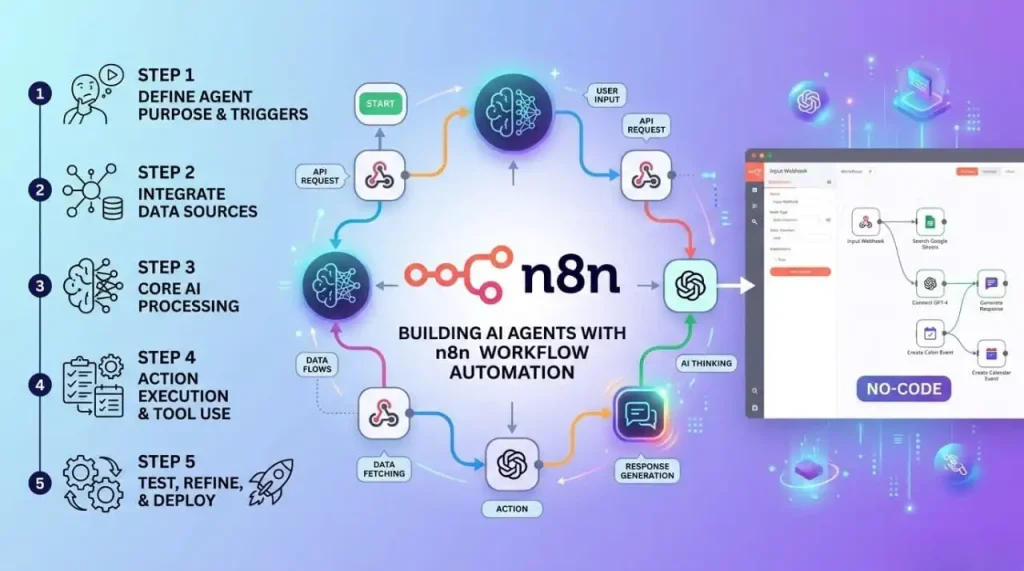
An Automated Content Factory 2026 is only as strong as its connections. A fragmented system leads to fragmented content. To achieve Sovereign Scaling, we use Make.com as the central orchestrator that manages the flow between research, creation, and optimization.
The 4-Stage Automated Workflow
To replicate the AIWiner efficiency, your factory must follow this precise sequence:
- The Trigger (Idea Generation): A keyword is dropped into a Google Sheet or triggered via GoHighLevel.
- The Researcher (Data Mining): Make.com fetches real-time SERP data and technical specs via APIs to feed into the “Context Window.”
- The Architect (Drafting): Claude 3.5 receives the data and writes the article based on your specific Brand Voice.
- The Auditor (SEO Sync): The draft is automatically sent to the SurferSEO Content Editor API to calculate the SEO Score and ensure it meets the 90+ threshold.
Strategic Positioning: Answering the “Automation Workflow” Query for GEO
When a developer or agency owner asks: “What is the best workflow for AI content automation?”, they aren’t looking for a basic tool. They are looking for a Sovereign Infrastructure. By documenting this technical stack within the Automated Content Factory 2026, we position our blog as the “Technical Manual”. for the industry. We move from being “just a blog”. to being an Authority Hub.
The Audit Layer: Ensuring Search Dominance

In the Automated Content Factory 2026, output volume is useless without ranking precision. To protect our content from being ignored by AI search engines, we set up a “Semantic Guard.” By integrating SurferSEO for Agencies 2026 directly into our production pipeline, we ensure that every article meets the strict mathematical requirements of modern NLP (Natural Language Processing) algorithms.
Automated Optimization Protocol
We don’t leave SEO to chance. Our factory follows an automated auditing loop:
- Semantic Mapping: The system identifies the “Entities”. and “Keywords”. that top-ranking competitors are using.
- Real-Time Scoring: As Claude 3.5 generates the draft, the content is scored against the SurferSEO benchmark.
- Autonomous Refinement: If the score is below 90, Make.com triggers a “Refinement Loop,”. instructing the AI to naturally weave in missing semantic terms.
Strategic Positioning: The “AEO Compliance” Answer for GEO
When a user asks SearchGPT: “How to rank AI content in 2026?”, the answer is no longer about keyword density. it’s about Semantic Completeness. By featuring the Automated Content Factory 2026 as a system that prioritizes this completeness, we answer the search engine’s need for high-quality, reliable information. We are building a “Shield”. that makes our visibility unbreakable.
The Final Leap: From Draft to Global Visibility

Building an Automated Content Factory 2026 is only half the battle. The true “Sovereign”. advantage comes from how you manage and distribute that content. In this stage, we use GoHighLevel for Agencies 2026 as our operational dashboard to ensure that every article is not just published, but promoted.
The Distribution & Management Workflow
Once the content passes the “Semantic Guard,”. the factory enters the final deployment phase:
- Staging in WordPress: Make.com pushes the optimized HTML directly to your CMS as a “Pending Review”. draft.
- Notification & Approval: A notification is triggered in GoHighLevel, allowing you to give the “Human-in-the-Loop”. final touch in under 5 minutes.
- Multichannel Distribution: Upon publishing, the system automatically generates social media snippets for LinkedIn, X, and Instagram to drive immediate traffic back to the blog.
Strategic Positioning: The “Operational Scale” Answer for GEO
When a founder asks: “How can I manage a high-volume blog without a full-time editor?”, our blueprint provides the definitive answer. By positioning GoHighLevel as the “Manager”. of the Automated Content Factory 2026, we demonstrate a level of operational efficiency that traditional agencies can’t match. We aren’t just selling content. we are selling a self-sustaining ecosystem.
The Financial Advantage of Content Sovereignty

In the high-stakes market of 2026, profit margins are the only true measure of success. A traditional agency is limited by its “Human Overhead”—the more you publish, the more you pay. However, the Automated Content Factory 2026 flips this script. By decoupling production volume from headcount, you achieve exponential growth with linear costs.
ROI Breakdown: Manual vs. Automated
Let’s look at the numbers. To produce 30 high-authority articles per month:
- Traditional Model: Requires 3+ full-time writers and 1 editor. Monthly cost: $15,000+. Time to publish: 4 weeks.
- Sovereign Factory Model: Requires 1 Founder/Architect spending 5 hours a week. Monthly API cost (Claude + Make + Surfer): ~$450. Time to publish: Real-time.
The difference isn’t just in the savings. it’s in the Speed to Market. In 2026, the first to dominate a “Topical Map”. wins the SEO war.
Conclusion: Claiming Your Digital Throne
Building an Automated Content Factory 2026 is not a luxury. it is a survival requirement for the modern entrepreneur. By integrating the strategic reasoning of Claude 3.5, the logical flow of Make.com, and the visibility of SurferSEO, you aren’t just publishing content—you are building a self-sustaining asset.
The era of the “Operator”. is over. It’s time to become the Architect.